
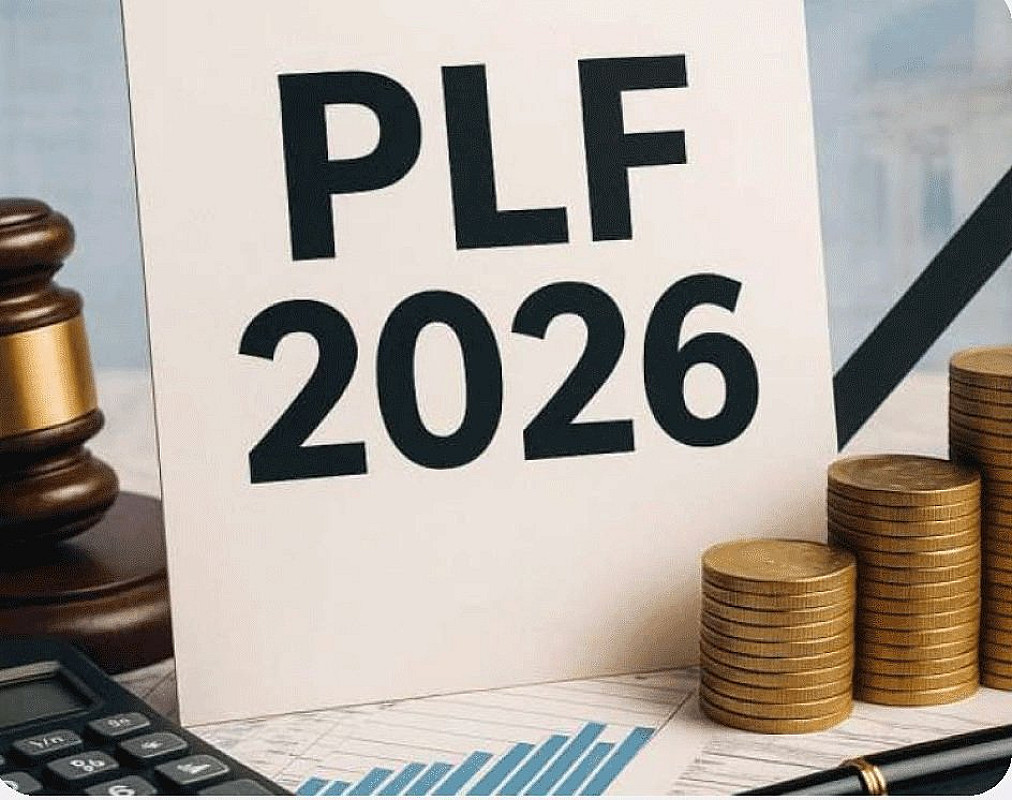
The government is targeting a reduction in the public deficit to 5% of GDP in 2027, compared with 5.4% in 2026.
The two bills (the Projet de loi de finances (PLF) and the Projet de loi de financement de la Sécurité sociale -PLFSS) contain a mixture of tax changes, changes to social benefits and healthcare spending, and measures aimed at businesses.
The bills have only just been submitted to Parliament, so the details may well change. The final decision will not be until the end of the year at the earliest.
The main changes as they affect households are set out below.
Income tax
The income-tax bands would be increased by 2.1%, reflecting the government's forecast for inflation excluding tobacco in 2026.
The proposal would also adjust the thresholds and limits linked to the income-tax scale and the default withholding-tax rates.
Retirees
There are two main proposals.
First, the government proposes to change the 10% income-tax deduction available on pensions, as we previously reported.
The existing overall ceiling is €4,439. Under the proposal, pensions would have a specific ceiling of €3,000.
The change would not affect the 10% deduction applicable to alimony and certain invalidity pensions.
The practical effect will depend on the size of the pension and the household's marginal income-tax rate.
The second measure affects the annual increase in French basic State pensions.
The PLFSS proposes a differentiated revaluation of pensions in 2027.
Pensioners whose total basic and supplementary pensions are €1,260 a month or less would receive the normal inflation-linked increase.
Above that level, the legislation creates several bands, with details to follow.
Social Security Benefits.
A range of social security benefits are to be frozen, with no automatic revaluation, although several will continue to be protected from inflation, eg RSA
Interest Free Mortgage
The government proposes to make the prêt à taux zéro (PTZ) more accessible to families expecting a child or already caring for a child under three.
Under the proposed amendment, a borrower could qualify if, when the loan offer is issued, the borrower either has a child to be born or is responsible for at least one child under three.
Gifts
For qualifying cash gifts made between 1st January and 30 June 2027, the government proposes a temporary reduction in gift tax.
The existing tax-free allowance for qualifying cash gifts would be increased from €31,865 to €50,000 during this six-month period. In addition, qualifying amounts above the existing tax-free allowance could benefit from a special 6% rate, on gifts of up to €100,000 from one donor to one recipient. The existing ordinary allowance (for example, €100,000 from a parent to a child) remains available.
The measure would apply to gifts to a child, grandchild or great-grandchild, or, where there is no such descendant, certain nieces, nephews or their descendants. The recipient would have to be at least 18 and under 50.
The measure is intended to encourage older generations to transfer savings to younger family members sooner.
Furnished Lettings
For owners of furnished rental property, the government proposes to limit the depreciation that can be deducted for tax purposes under the régime réel. So those who use the ‘micro’ system of taxation are unaffected.
For non-professional furnished rentals (LMNP), depreciation on qualifying residential property would generally be limited to 2.5% a year, with a maximum deduction of €7,000 per household per year.
A separate limit would apply to tourist furnished rentals (meublés de tourisme), where the depreciation rate would be 1.5% a year, with a maximum deduction of €5,000 per household per year.
Some residences would escape the new limits, notably those reserved exclusively for students, certain young people in training or elderly people, and certain facilities for elderly or disabled people.
The proposal forms part of a broader effort to bring the tax treatment of furnished and unfurnished rental property closer together and to encourage longer-term residential letting.
Sick Pay
The Finance Bill proposes to tax 50% of daily sickness benefits paid in respect of long-term medical conditions (ALD) for income-tax purposes.
It also proposes ending the current partial income-tax exemption for daily benefits paid in respect of work accidents and occupational diseases.
In addition, the PLFSS proposes increasing the CSG social charge rate applied to sickness daily benefits by three percentage points.
Complementary Health Insurance
The cost of supplementary health insurance may remain under pressure.
The government proposes to renew for 2027 the exceptional contribution from complementary health insurers.
The expected revenue is €1.1 billion.
The contribution is formally imposed on the insurers rather than directly on households. Its eventual effect on premiums will depend on how insurers absorb or pass on the additional cost.
Car Insurance
The government proposes raising the tax on certain motor-vehicle insurance contracts by 0.9 percentage points, from 18% to 18.9%.
The tax is incorporated in insurance premiums so it will add to existing pressure on the level of premiums for next year.
Vehicle Taxes
The government does not propose a wholesale reform of vehicle taxation, but the Finance Bill contains several changes affecting cars and company vehicles.
These include adjustments to the environmental taxation of vehicles, including changes to the treatment of vehicles according to their emissions, as well as changes to the tax treatment of vehicles made available by employers to employees.
The proposals would therefore affect both private vehicle taxation and the treatment of company cars, although the impact will depend on the type of vehicle and how it is used.
Related Reading: