

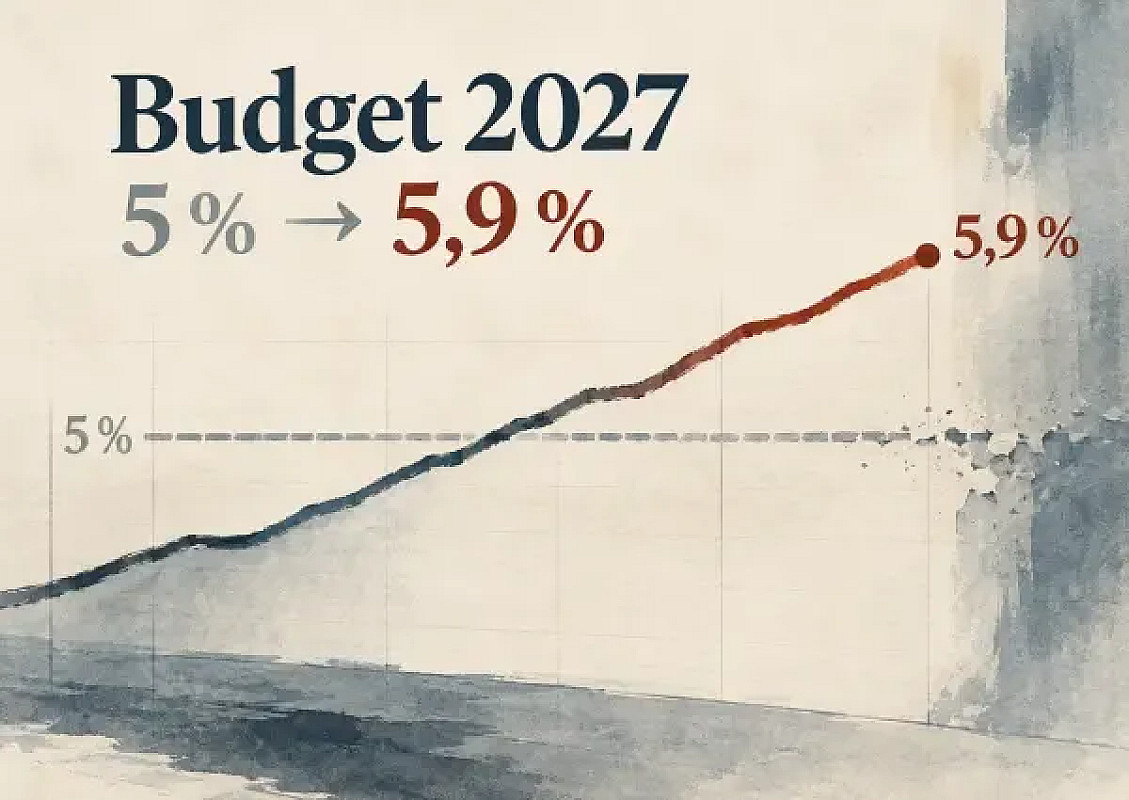
The government needs to get a 2027 budget through a deeply fragmented Parliament, with a presidential election falling directly in the middle of the process.
The first round of the election is scheduled in April 2027 and the second in May.
France's public finances are already among the most stretched in the European Union.
The deficit currently stands at roughly 5% of GDP, which is well above the EU's 3% ceiling.
Public debt is projected to reach around 116% of GDP, making France the eurozone's third most indebted state, behind only Greece and Italy.
In September 2025, Fitch cut France's sovereign credit rating from AA- to A+, citing the country's high and rising debt burden and the political difficulties of delivering credible fiscal consolidation. It was the lowest sovereign rating Fitch had ever assigned to France. Fitch projected that France's debt burden would continue to rise.
France has been subject to the EU’s excessive deficit procedure since July 2024 and is required, along with several other member states, to follow a credible path towards reducing its deficit.
The government's own target for 2027 is a deficit of 4.9% of GDP, which is notably less ambitious than earlier plans.
In both 2025 and 2026 France entered the year without a finance law in place, relying instead on a temporary legal mechanism to keep the state functioning while Parliament caught up. The 2026 budget wasn't finally approved until February and only after the government forced it through repeatedly using special constitutional powers.
If Parliament fails to adopt a finance law before the end of the year, the government can once again use constitutional mechanisms to keeping the state functioning. But these mechanisms were intended to deal with a temporary interruption, not potentially carry the country through much of an election year.
However, if the government uses constitutional powers to force a budget through, it could still be brought down by a successful motion of censure, potentially leaving the budget in force after the government that introduced it has gone.
The President can appoint another Prime Minister and attempt to form another government. But neither that nor the more radical dissolution of the National Assembly are easy solutions.
The government is therefore determined to get the 2027 budget through Parliament before the presidential campaign dominates French politics, making political compromise much more difficult.
Prime Minister Sébastien Lecornu has therefore been appealing to lawmakers to recognise that France can no longer be governed effectively by a single political camp and that finding a consensus is the only realistic way of passing a budget.
Whether there is enough political goodwill left to make it possible is another matter.
Related Reading: