
A new study by the Fédération Nationale de l'Immobilier (FNAIM), the national association of estate agents, shows that while coastal property remains among the most desirable sectors of the French housing market, prices have been declining for more than two years and are now performing less well than the market nationally.
The figures suggest that the exceptional demand generated during and immediately after the Covid pandemic has eased, with the coastal market now returning to more normal conditions.
According to FNAIM, prices in France's 515 designated seaside resorts (stations balnéaires) fell by 1.2% in 2023 and have since remained on what the organisation describes as a "slightly downward plateau", declining by an average of 1.6% over the past 28 months.
That compares with a +0.8% increase across France as a whole over the same period.
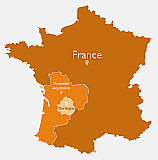
Over the 12 months to May 2026 there were significant regional differences, with Brittany recording the sharpest decline (-2.7%), followed by the Pays de la Loire (-1.7%), Normandy (-1.2%) and Nouvelle-Aquitaine (-1.1%).
By contrast, Provence-Alpes-Côte d'Azur (PACA) was the only coastal region to record a significant increase, with prices rising 2.2%.
Even so, seaside homes remain substantially more valuable than they were before Covid. Since 2020, prices have risen by around +25%, compared with approximately +20% nationally, reflecting the pandemic generated demand for larger homes, holiday properties and coastal living.
The table below shows the most expensive and cheapest coastal prices by region, illustrating the enormous variation in seaside property values across France. Even within regions, prices vary substantially.
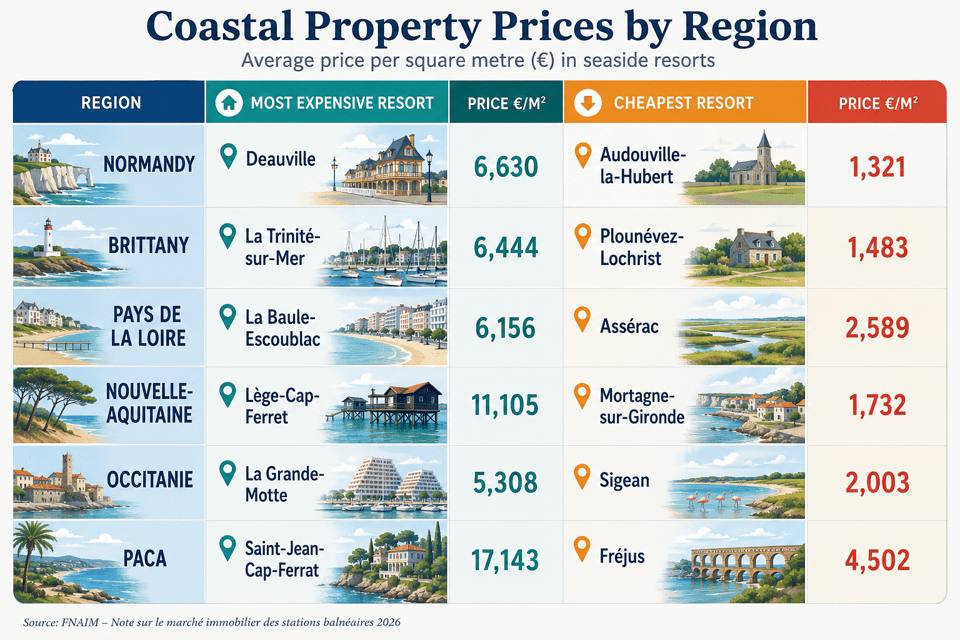
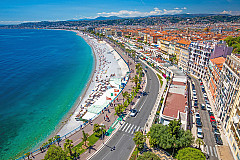
The Mediterranean coast remains by far France's most expensive coastal market.
Three Riviera resorts — Saint-Jean-Cap-Ferrat (€17,143/m²), Saint-Tropez (€16,348/m²) and Ramatuelle (€15,928/m²) — occupy the top three positions nationally.
At the opposite end of the scale, parts of the Normandy coast and northern Brittany continue to offer some of France's most affordable seaside property, with prices in several communes remaining below €1,500 per square metre.
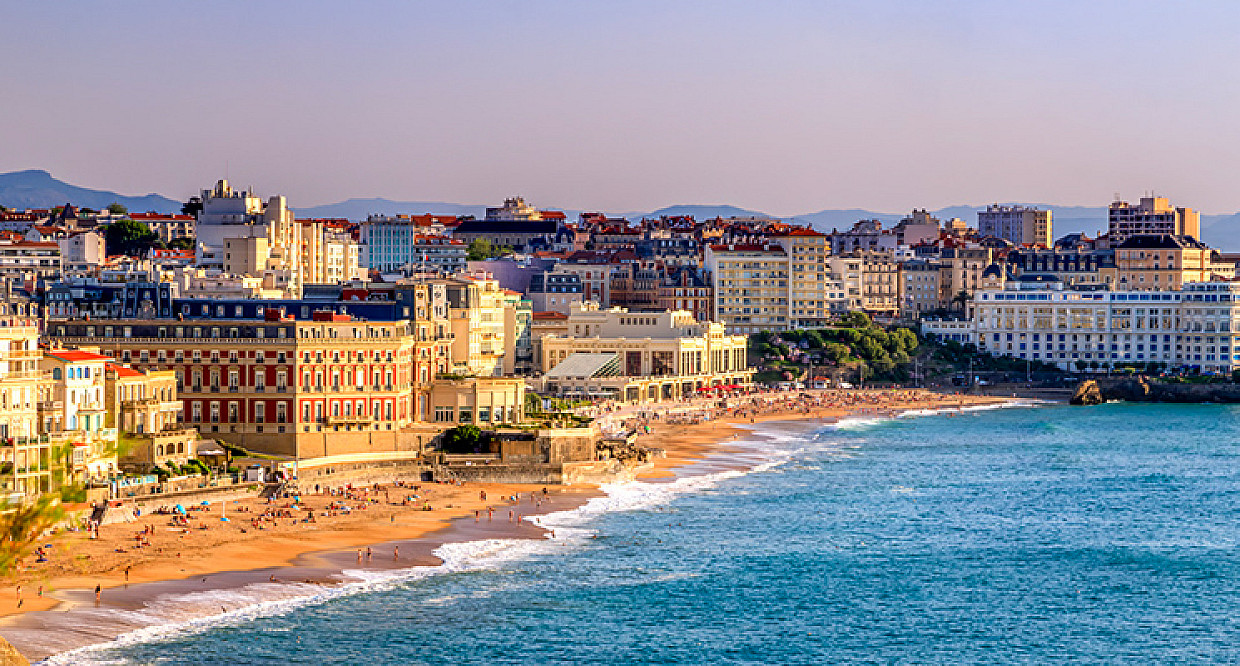
The Atlantic coast occupies something of a middle ground. While prestigious destinations such as Cap Ferret, Hossegor and Île de Ré command prices comparable with some Mediterranean resorts, many neighbouring communes remain considerably more affordable.
Climate Paradox
Perhaps the report's most surprising finding concerns climate change.
Following the government's designation of 230 seaside resorts as being exposed to long-term coastal erosion, many observers expected those areas to underperform the wider market.
Instead, FNAIM found that over the past year prices in these municipalities rose by around 1.5%, while prices in other seaside resorts fell by around 0.5%.
However, such figures need to be interpreted with care, as the government's coastal erosion designation applies to entire municipalities, not individual properties. In many cases only relatively short stretches of coastline are actually vulnerable, meaning buyers may simply be purchasing homes located well away from the areas at greatest risk.
The report also confirms that France's seaside property market is increasingly dominated by older buyers.
The average purchaser is now 55.7 years old, which may itself explain why concerns about climate change have yet to make a significant impression on prices. Many purchasers are buying retirement homes or second residences with relatively short ownership horizons, rather than family homes intended to be occupied for several decades.
Foreign Buyers
Despite the visibility of British, Belgian and Dutch second-home owners in some coastal areas, overseas purchasers account for only 4.8% of transactions in France's seaside resorts, well below their 7.9% share of the national housing market.
Once again, however, there are significant regional variations. Some Riviera markets have foreign buyer shares well into double digits. In parts of northern Brittany and the Vendée, British, Belgian and Dutch buyers are numerous.
Overall, Belgians remain the largest foreign buying group, followed by the British contingent.
Related Reading: