

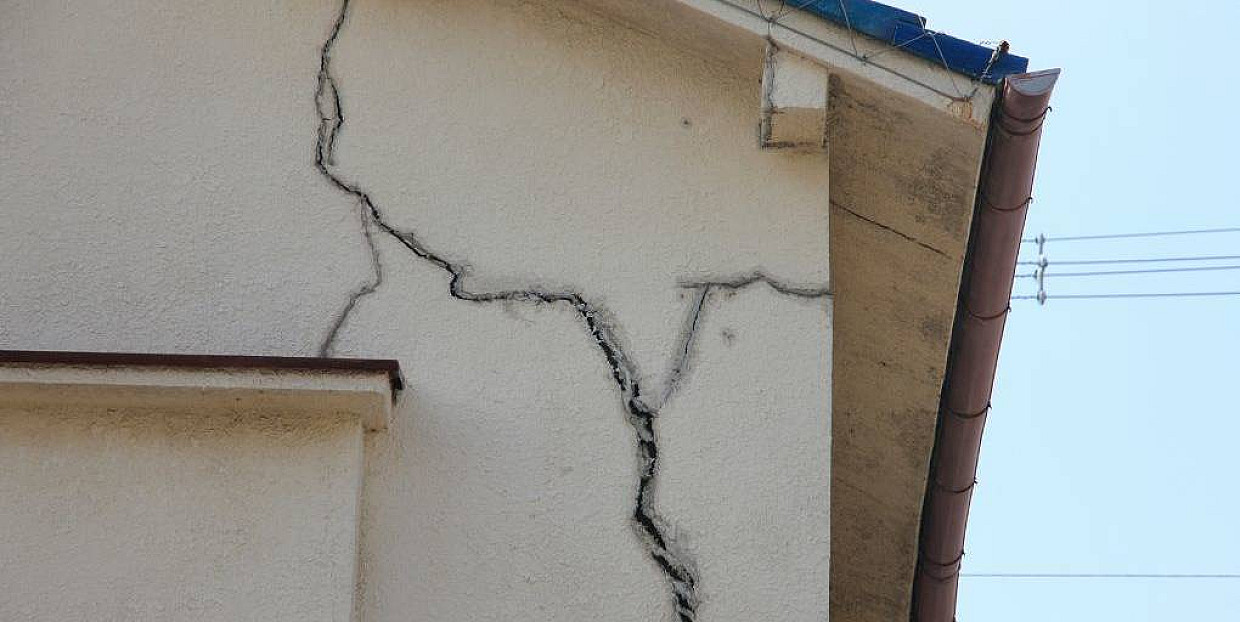
The ruling, handed down by the French Supreme Court (Cour de cassation), concerned a homeowner in the Gard department whose house developed cracks following an exceptional drought in the summer of 2016.
After the government declared a state of natural disaster, the owner sought compensation under the mandatory catastrophe naturelle guarantee included in French home insurance policies.
An appellate court in Nîmes had awarded the homeowner €40,000 in damages, accepting expert evidence that the cracks were caused by differential settlement linked to the drought and had appeared after the insurance policy was taken out.
The Cour de cassation overturned that decision.
Rather than disputing that drought can cause structural damage, France's highest civil court held that the lower court had failed to examine an essential legal requirement contained in the country's natural disaster regime: whether "the usual preventive measures" could have prevented the damage or whether such measures could not have been taken.
The court recalled the statutory definition of a compensable natural disaster, stating:
"Damage is deemed to result from a natural catastrophe where it is caused primarily by the abnormal intensity of a natural phenomenon, provided that the usual preventive measures could not have prevented the damage or could not reasonably have been taken”.
Because the Court of Appeal had not examined whether this condition was satisfied, the judgement was quashed.
Commenting on the ruling, lawyer Hassan Kohen said: "The burden of proof falls on the insured, as the party seeking compensation, to demonstrate that they complied with this obligation or that such preventive measures were impossible."
That procedural point could prove significant in future disputes. Homeowners may increasingly be expected to demonstrate that they took reasonable steps to protect their property before damage occurred.
However, there is no comprehensive national standard defining precisely what ‘usual preventive measures’ (mesures habituelles de prévention) entail for homes exposed to drought-induced shrink-swell of clay soils (retrait-gonflement des argiles).
Industry observers say this creates uncertainty for both insurers and policyholders.
Philippe Isselin, co-founder of geotechnical company TerraStab, described the ruling as a turning point, stating: "Prevention is no longer a choice but a legal condition for compensation.”
Isselin also criticised the absence of official guidance, adding: "Nobody tells homeowners what measures to take. There is no national reference framework defining what constitutes a 'usual preventive measure'. You are being asked to comply with a rule that has never been explained."
Potential preventive actions might include monitoring cracks, controlling vegetation close to foundations, maintaining effective drainage, repairing leaking pipes and, where appropriate, stabilising the soil beneath foundations. However, neither the legislation nor the judgement specifies which measures are sufficient in any given case.
‘CATNAT’ Insurance
The ruling comes as France's Catastrophes Naturelles (CatNat) scheme is under growing financial pressure from climate change. Created in 1982, the CatNat scheme spreads the cost of natural disasters across all insured homeowners through a compulsory levy on property insurance policies.
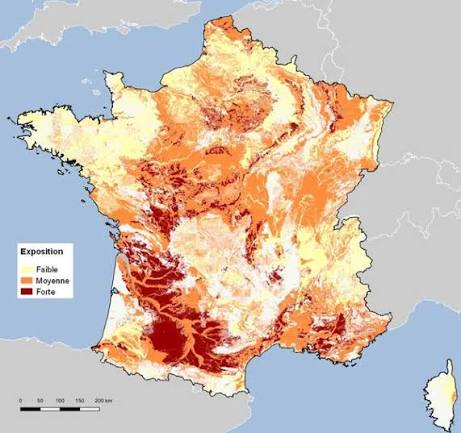
Drought-induced subsidence has become one of the fastest-growing sources of insurance claims, with official estimates suggesting that more than 10 million homes are built on shrink-swell clay soils. The map below shows those areas most affected.
Insurance premiums have risen in part because the government increased the compulsory CatNat levy on home insurance policies from 12% to 20% with effect from January 2025, citing the escalating cost of climate-related claims, particularly drought-induced subsidence.
Uncertainty
Until now, homeowners regarded publication of a natural disaster decree and expert confirmation that drought caused the damage as the principal hurdles to obtaining compensation.
The new ruling has highlighted a further statutory requirement that has hitherto received little judicial attention.
However, Cour de cassation did not conclude that the homeowner was automatically barred from compensation because preventive measures had not been taken. Instead, it found that the Court of Appeal had failed to examine an element required by law before awarding damages.
In other words, the case primarily concerns the evidence needed to establish entitlement to compensation.
Until clearer guidance emerges, or the courts establish more consistent principles, both insurers and policyholders are likely to face greater uncertainty over what constitutes adequate prevention.
Related Reading: