
The court confirmed that, where land becomes landlocked following a sale or division, access must generally be sought through the land involved in that transaction, not over property owned by an unrelated third party.
The dispute concerned several adjoining plots in south-west France. In 1999, a couple acquired a number of neighbouring parcels and combined them into a single property. The property had access to a public road through one particular plot.
In 2013, they sold two of the plots, including the plot that provided road access. This left the remaining land without direct access to a public road. The landlocked parcels were then sold to a property company in 2017.
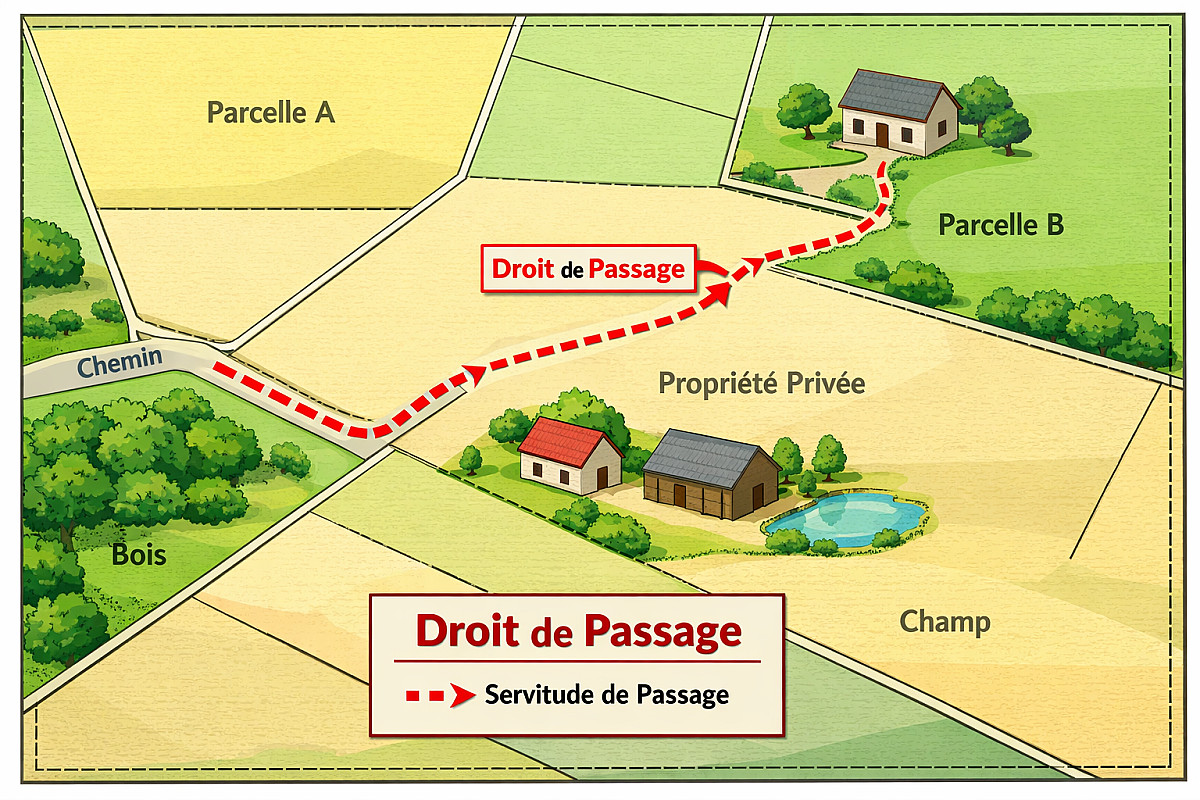
The new owners later sought a right of way over neighbouring land. Under the French Civil Code, an owner who has no sufficient access to a public road may, in certain circumstances, obtain a right of passage over neighbouring land.
However, the neighbour argued that this general rule did not apply. The lack of access had been caused by the 2013 sale, which divided what had previously been one connected property.
This situation is governed by Article 684 of the French Civil Code. It states that when a property becomes landlocked because of a sale, exchange, partition or similar division, any right of way must be claimed over the parcels that were part of that division. The owner cannot normally require access across land owned by an unrelated third party.
The property company appealed, arguing that the land had effectively been without access even before the plots were brought together in 1999. It also argued that, as a later purchaser, it should not be affected by the consequences of the 2013 transaction.
The Cour de Cassation rejected both arguments. It found that, once the parcels had been combined in 1999, the property had access to the public road and was therefore not legally landlocked. The 2013 sale of the access plot was the direct cause of the later enclosure.
The court also confirmed that selling the landlocked plots to a new owner did not change the legal position. A purchaser takes the property subject to the consequences of its earlier division.
The new owner was therefore unable to obtain a right of way over the neighbour’s land. The company was ordered to pay the legal costs and €3,000 towards the defendant’s expenses.
Related Reading: