

Since 2006 an obligatory energy efficiency survey has been required on the sale and, more recently, the letting of property.
The survey is called the Diagnostic de Performance Energétique (DPE), one of several surveys and reports that form the complete home information pack, called the Dossier de Diagnostic Technique (DDT).
In July 2021, a change in the DPE was introduced.
One of the most significant changes was that where previously the energy report was for information value only, it is now legally enforceable, meaning that a buyer could later sue a seller for an incorrect rating, who could in turn bring a legal action against the survey company if they got it wrong.
Substantial changes were also introduced to the way the energy survey was undertaken. As originally cast, the level of energy efficiency of a property was based primarily on the bills (and so the level of energy consumption) received by an occupier for heating - whether electricity, oil, gas or wood. As occupants vary in just how often they switch on the central heating boiler this inevitably led to a different energy rating for the same type of property!
Under the new system, more sensibly the technician is now required to look at the characteristics of the building: insulation, materials, heating and hot water systems, glazed surfaces, etc.
In addition, 5 uses of energy consumption are included the calculation, against 3 previously: heating, hot water, air conditioning, lighting and auxiliaries.
Some sophisticated software is needed to undertake the energy efficiency calculation, as well as the production of evidence of energy efficiency measures undertaken by the owner.
If the result of the survey ends in the property being given a low energy efficiency rating of 'F' or 'G', the owner is required to have a full energy audit undertaken, which will provide guidance to a prospective purchaser of the works required to improve the energy rating of the property. The introduction of this requirement has been delayed serveral times due to technical difficulties, and is now set to be introduced from 1st April 2023. From 1st Jan 2025 the audit requirement applies to those classed 'E' and from 2034 for those with a 'D' classification.
This measure will not come into effect until 1st September, due to a lack of trained technicians. Sidiane, the professional body of survey technicians considers that a new later deadline of January 1, 2023 is essential stating: “To date, the implementation of the mandatory energy audit is far from being operational.".
After only three months of the new system far more properties than expected were obtaining the lowest 'G' energy efficiency rating.
This started to cause panic amongst landlords, as from 2025 those properties with an energy rating of 'G' cannot be used for letting purposes. From 2028 the same will apply to those rated 'F', as will be the case from 2034 all those with an 'E' rating. The rule will apply apply where the property is the principal residence of the tenant, although the government are considering extending it to short-term furnished lettings.
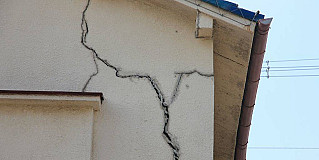
Those properties with either a F or G rating are known as 'passoires thermiques' - which can be literally translated as meaning that it 'leaks like a sieve'.
Out of the 29 million homes in France, it is believed that under the new rating system, up to 7 million homes could carry the unpropitious label.
Professionals in the sector consider that the error rate in the performance rating to be as high as 30%. Thus, for example, although a property may well have a high level of insulation, if it is heated by an oil-fired boiler, the technician is obliged to downgrade the energy efficiency rating.
As a result, in November 2021 the government suspended the new system, with revisions to the process, and ordered new surveys be undertaken for all pre-1975 properties.
Despite the changes, there continues to be complaints from home- owners who consider their home has been unfairly rated and from professionals who consider that the system is place is inadequate.
In an interview with the consumer magazine Que Choisir one of the software designers of the new system admitted there remained problems, stating: "The software performs a theoretical calculation, based on the information that the technician enters. If the owner of a dwelling is able to provide documentation for works carried out such as, for example, the presence of insulation and its thickness, the age of heating equipment or other important elements, everything is fine. Otherwise, since the survey technician can now be sued if they get their calculation wrong, many prefer to protect themselves by entering default values, which are always the worst."
In short, that the new test suffers from the same problem as its predecessor in that it is subjective.
The President of the industry association of DPE companies, Frédéric Mirabel-Chambaud is concerned at the sheer number of properties that could have a poor energy rating, stating that: "A whole part of the housing stock will be automatically classified with a poor energy rating, whatever we have done to improve it," he says. "Some properties have peculiarities that the DPE does not take into account. We will thus prohibit the rental of a large part of our housing stock."
As the forthcoming deadline on the letting of passoires thermiques approaches, agents report that many landlords who are unwilling or unable to invest to bring their property up to the minimum standard have put it on the market for sale.
A raft of reports in recent months have also shown that the energy rating on a property was becoming an increasingly important factor in the choice by buyers and, ultimately, in the sale value of the property, with a leaky home up to 17% lower in price than a similar well insulated property.
That will not be welcome news to sellers, but as many poorly insulated properties will be older homes of character, might the misfortunes of some be an opportunity for canny buyers to snap-up a property that is 'leaking like a sieve' at a bargain price?
Related Reading: