
The decision was made by the nine councils who make up the inter-communal municipality of Fayence.
The communes concerned are Bagnols-en-Forêt, Callian, Fayence, Mons, Montauroux, Saint-Paul-en-Forêt, Seillans, Tanneron and Tourrettes.
The decision was taken due to the risk of not being able to connect new buildings to a water supply.
Other measures are already in place, with controls over refilling of pools, watering of gardens and washing of vehicles.
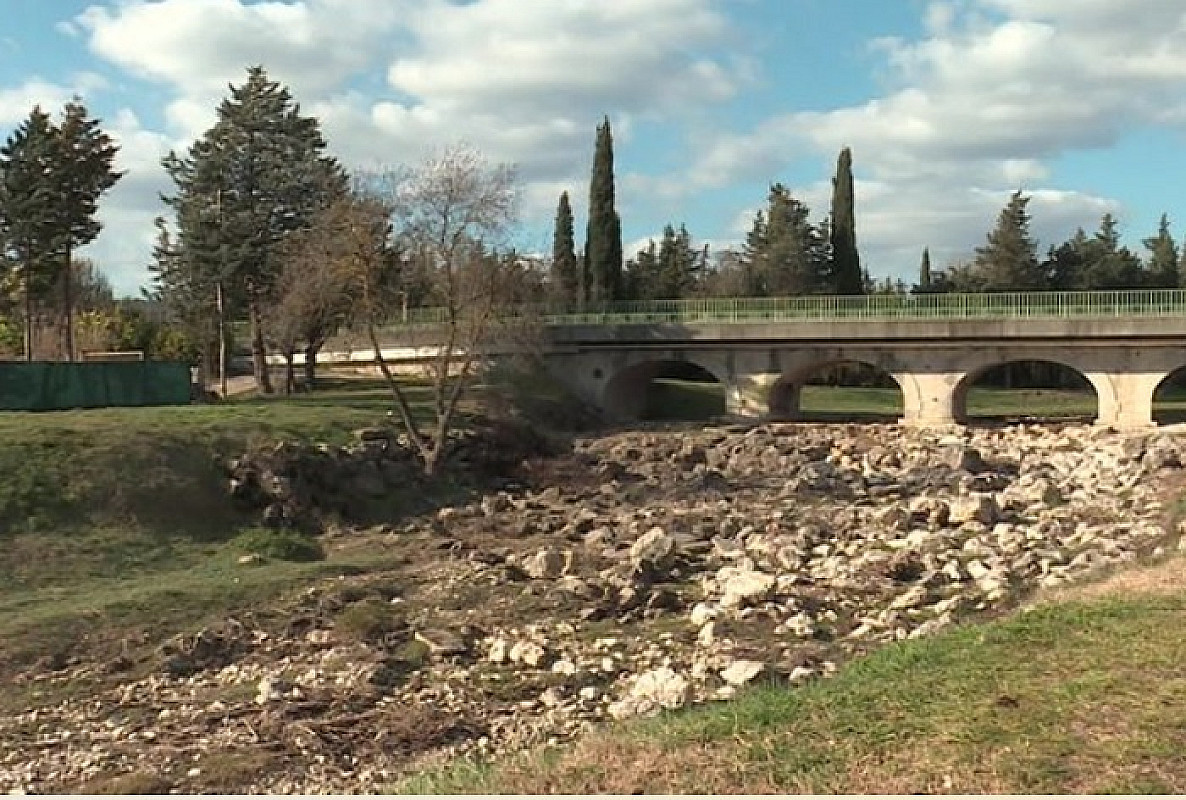
In the Var, more than 80 municipalities have already declared a drought alert, a totally unprecedented action at this time of year.
At a national level, the Ecology Minister, Christophe Béchu, recently stated that 2022/23 has been the driest period since 1959. According to Météo France, February will end with a rainfall deficit of more than 50%, one of the driest ever recorded for the month.
The inter-communal Fayence council have confirmed that all existing planning consents will be honoured, including 1,000 homes for which consent has already been granted. The value of those plots is expected to soar.
It is, however, unclear whether the decision of the council will be allowed to stand. In law, a suspension of planning consents cannot exceed two years.
Beyond this period planning consent can only be refused in the event of non-compliance with the local or national planning rules.
It is, therefore, likely that the mayors will face litigation, but the jurisprudence on the issue is untested.
Meanwhile, matters are moving fast at a national level with a bill tabled in the French parliament by the UDI deputy of the Vosges Christophe Naegelen, "aimed at preserving the water resources of communes".
The bill is designed to "provide the mayors of municipalities that do not have a local urban plan with the power to authorise or prohibit new construction when they present a risk to the balance of water resources of the municipality and its environment. "
The French government have yet to express a view on the proposed legislation, but crisis meetings are taking place to establish new restrictions on water use.
For leading environmental lawyer Arnaud Gossement, speaking to the French press, local decisions of this nature are likely to multiply as long as the state does not take a position. "The mayors are distraught and the state is procrastinating.... We need to have a national debate on the subject. What building permits can we continue to authorise? What will we do if it's a nursing home, a hospital, a crèche? The state must take a stand. We have turned a corner with climate change," he stated.
Related Reading: