
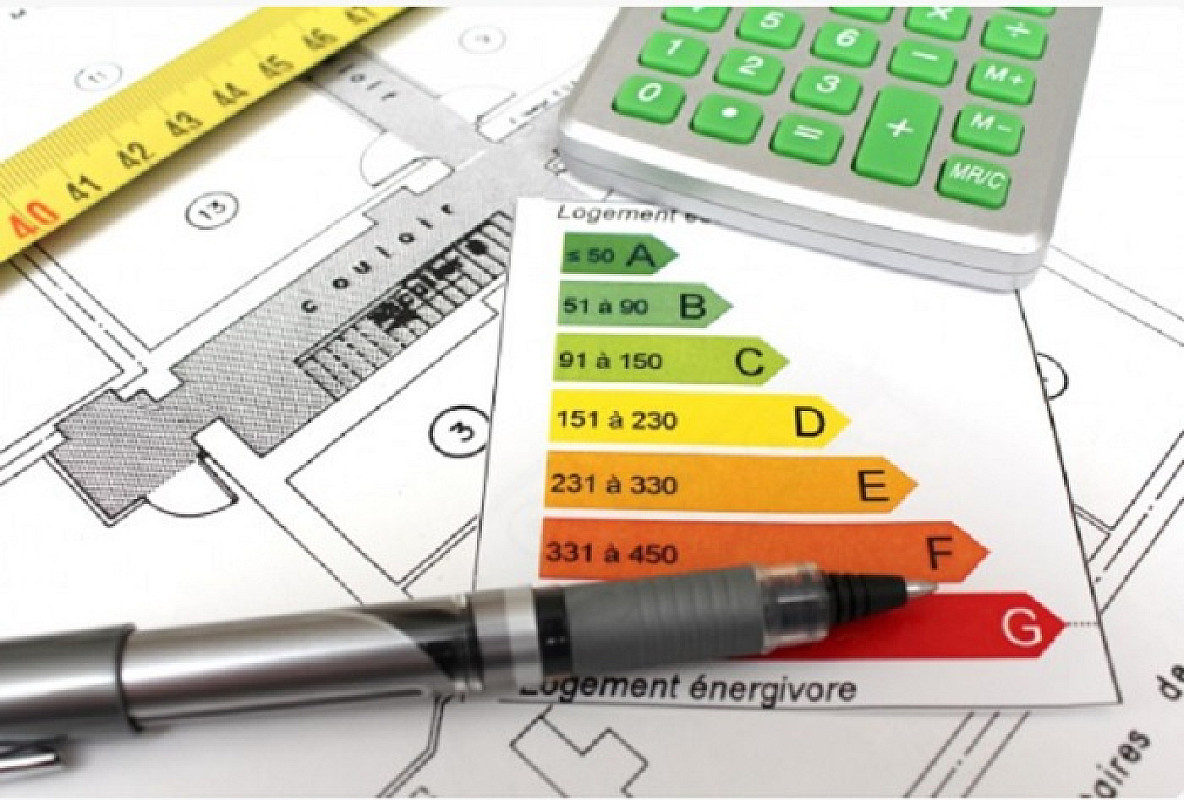
The statutory energy survey is called the Diagnostic Performance Energétique (DPE).
In the context of climate change and the current energy crisis the information it provides has become indispensable for sellers and buyers, as well as landlords and tenants.
Several recent reports from notaires, estate agents and other market analysts attest to the growing importance of the surveys in determining the value of a property.
For landlords the position is equally significant, for from 1st January 2023 a property that consumes more than 450 kWh/m2/year cannot be used for letting purposes, a noose that will tighten further in the coming years.
In addition, landlords owning those properties rated F or G are no longer permitted to increase rents, for contracts signed since 22nd August 2022.
There are also tighter controls on adverts for sale or rent, which must now expressly state the energy rating of the property. Buyers and tenants must also be provided with the energy report.
As a result, there is a growing shortage of property to rent on an annual basis, with Paris particularly hit by the change, where it is estimated around two-thirds of properties are classed either E, F or G.
However, the real ire of sellers and landlords is left for the technicians who undertake the surveys, due to the huge discrepancies that are occurring and the poor recommendations that are being made.
Two major studies carried out by separate consumer groups recently found substantial differences in the energy rating given to the same property by different technicians.
In some cases the margin of the difference was colossal, with one property having a rating that varied from A to G!
The technicians are also obliged to provide a recommendation on the works that should be carried out to improve the level of energy efficiency.
Once again, the level of incompetence displayed was lamentable, with recommendations being made for works that had already been carried out or for expensive improvements that would make little difference to the energy rating.
In other cases, recommendations for works were made on properties that were entirely unsuited to the works specified due to their architectural character or conservation area status.
The reasons for the inconsistencies and errors are multiple, including both legal and professional factors, but much has to be attributed to the tools which have been given to the technicians to do their job.
Software
In order to come up with their energy rating, the technicians enter the survey data into a software programme which then produces the result. There are several programmes on the market, all of which have been validated by the government.
However, the parameters set on these programmes are complex and opaque, mainly to avoid falsification of the result, but it does mean it is impossible to understand which criteria impact most strongly on the result, or the works necessary to improve it.
The algorithm in the software appears to be heavily weighted against the use of gas or oil. As a result, properties in the tests that were otherwise well insulated were given a lower rating due to the type of fuel used.
Approximations in some of the raw data to enter into the programme are inevitable as all of the information is unlikely to be available to the technician, such as the age of property or the specification of equipment/materials. Inevitably, differences in the date entered can make a difference to the final result.
And as laudable as it might be to ensure the results are not tampered with, collusion between seller and surveyor remains possible on the data that is entered, as minor manipulations can bring a material change in the result.
As the same software produces the recommendations and prices for the improvement works, similarly incoherent and vague results can arise, notably in relation to prices for works, which are set at a national level, and which may bear no relation to the local cost of the works, materials or equipment used.
Technician Prudence
Although technicians can mediate on the works recommendations, most are cautious about doing so due to the legal obligations now imposed upon them. Where previously the reports were for information only, they can now be sued by seller or buyer if they get it wrong.
As a result, many properties are getting a poor energy classification due to the caution being exercised.
Some technicians are also insisting on the seller producing invoices for works carried out to the property, particularly if they are not visible, eg ceiling insulation. If the invoice is not available the works may not be eligible.
Until the government decides that further changes are necessary to the way the surveys are undertaken, sellers and landlords would be well advised to choose their survey company with care, to discuss with them their approach, and not to necessarily select the cheapest. Buyers and tenants may also want to view the reports with a degree of circumspection.
Related Reading: