

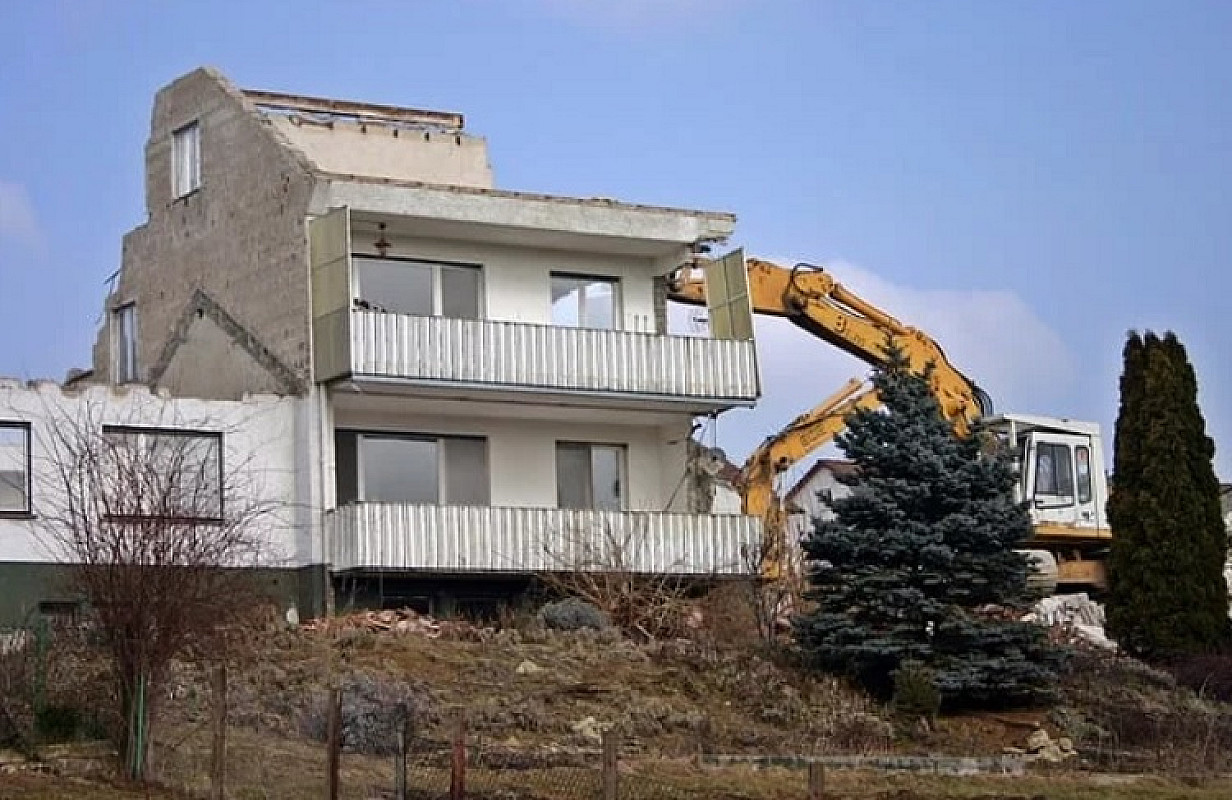
Building Too Low
In the first case, a house was constructed 12cm lower at ground level than was stated in the planning consent.
As a result, the local authority refused to issue a certificate of conformity as the house was built lower than the adjacent road, which would lead to flooding of the property.
The owners of the house brought a legal action against the builder to withdraw from the contract, for the house to be demolished and the land to be reinstated prior to the construction.
The builder contested demolition of the property on the grounds that non-compliance with a planning consent did not make the property unsuitable for use and that demolition was a disproportionate remedy for the prejudice that had been suffered.
The court noted that the builder did not supply details or costs of remedial works that could be undertaken to bring the property in line with the planning consent. In the absence of any proposals it was not possible to submit a fresh planning application to modify the plans.
As a result, the court considered that demolition of the property was the only possible solution.
Roof Too High
In the second case, the owner of a plot of land on the Atlantic coast built a house which their neighbour considered was in breach of the local plan and the planning consent granted for the building.
In particular, the building deprived the neighbouring land of a large part of the panoramic view of the coastline, limited the sunlight it enjoyed and reduced the luminosity of the living room of the house.
The neighbour brought a legal action for the building to be brought into compliance with the planning consent. In concrete terms, to reduce the height of the building by 70 centimetres.
The owner pleaded that the cost of bringing the property into compliance was disproportionate and that an award for damages was the appropriate remedy.
Although in contract law in France forced execution cannot be ordered when the cost is manifestly disproportionate, that was not the case in tort, where under the civil code the plaintiff must be fully compensated, leaving no discretion to the court.
As a result, the owner was ordered to demolish the roof of the property and bring it into compliance with the planning consent.
Tom Easdown, Managing Director and architect at French Plans, comments that: "A simple process exists for plans to be later modified, prior to commencement of works on-site. Indeed, even after the works are completed it is possible to submit a revised planning application to deal with changes that may have occurred, although of course there can be no guarantee they will be accepted."