
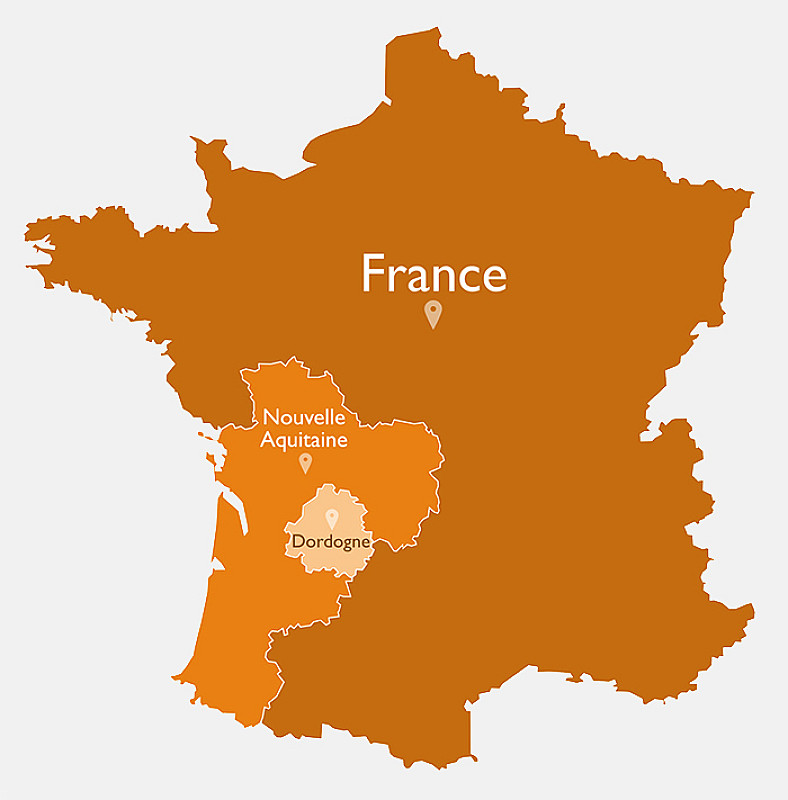
After a hesitant 2025, the notaires report that the wider department has settled into something resembling calm. Sales have shown a positive turnaround, with older property prices rising by 1.4% to a median €148,000, while apartment prices have edged down slightly.
However, scratch beneath the surface and a rather different picture emerges. Laurent Peybeirnes, a notaire based in Bergerac, puts it succinctly: "While some areas are thriving, others are lagging, creating a patchwork of micro-markets within Dordogne," he says.
Bergerac
Nowhere illustrates the divide better than Bergerac, an hour and a half's drive from Bordeaux and considered something of a poor relation to medieval Sarlat, a popular destination for British buyers.
However, apartment prices there are up 7.7% over the year, houses up 5.2%, and estate agents describe a town suddenly fashionable with buyers priced out of Bordeaux.
"Bergerac is correcting after years of undervaluation," says Peybeirnes. "The price rebound is real and sustainable, backed by strong fundamentals." Those fundamentals include prices up to 40% below Bordeaux, a working vineyard landscape that photographs well and sells better, and an airport with direct flights to Britain.
Jean Dupont, who sells property in the town, has noticed the shift. "We're seeing a 20% increase in inquiries from international buyers compared to 2025," he says. "Many are cash buyers looking for a second home or rental investment."
He notes that "Old stone houses are the backbone of the Dordogne market. Buyers love the character and history, but they often underestimate the renovation costs."
Périgueux
The departmental capital, meanwhile, is holding steady. It handles roughly half of all apartment sales in Dordogne.
The average price for apartments is €90,000 while houses sell for an average of €163,600, up 0.8% year on year.
Nyrine Boulanger, an estate agent in the city, thinks the real action has moved just outside the ring road. "Périgueux is holding up well," she says, "but the real opportunities are in the suburbs, where buyers can get more space for their money just 10 to 15 minutes from the centre."
Sarlat
Further south, in Sarlat, the story is more bittersweet. The luxury end of the market, at over €300,000, has cooled noticeably, with median house prices down 4.1% on the year. "The high-end market is taking a breath," says local notaire Laëtitia Leo, "but rental demand is stronger than ever. Many buyers are focusing on properties with rental potential rather than pure second homes."
Nontron
In the north, house prices remain the cheapest in the department, at an average of just under €114,000.
That affordability, combined with decent broadband, is starting to draw younger, often self-employed buyers working remotely rather than retiring. "We're seeing more younger buyers, often remote workers or digital nomads, looking for affordable homes with land," says local agent Pierre Martin. "High-speed internet has made this possible." Notaire Laëtitia Leo agrees the region's moment may finally be arriving: "It's a great time to buy before prices catch up with the rest of the department."
British, Dutch and Belgian buyers together account for roughly a third of transactions in Bergerac and Sarlat, and this year a weak euro against the pound and dollar has quietly made French property cheaper for anyone paid in sterling. "The weak euro is a big factor this year," Boulanger notes. "We're seeing more British buyers taking advantage of the favourable exchange rate." The department is also attracting more French buyers. "Many French buyers are relocating from Bordeaux, where prices have outpaced salaries," says notaire Maylis Bauchiero. "Dordogne offers a similar lifestyle at half the cost."
In summing up the market, notaire Laurent Peybeirnes says that it has learned to live with its own contradictions: "Dordogne is not one market. It's four."
Related Reading: