

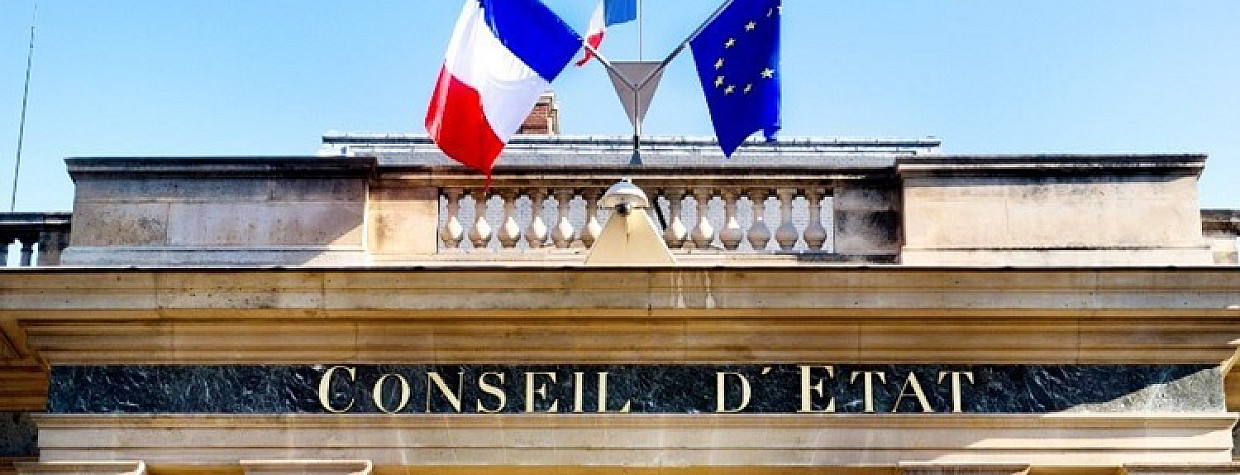
In the case, heard in the Supreme Administrative Court, the Conseil d'État, a company director had been granted stock options in a US company.
Following his death in September 2011 and immediately after the settlement of the estate, his widow exercised and sold these options, generating an overall capital gain of €6.9 million.
The funds had been paid into an account opened in the United States in the name of the deceased, over which his widow did not have power of attorney. Neither had the account been directly used by her.
Arising from an investigation, the French tax authority considered that the share of the gain accruing to the widow and her daughter (then attached to her tax household), amounting to €2.5 million, should have been included in the income declared by her for the year 2012 and taxed at the rates of 30% and 41%. It thus claimed the tax due and imposed a tax penalty.
The case considered several different questions, including whether the heirs had a tax liability and the basis on which the gains were to be taxed.
With those claims quickly dismissed by the court, the widow and daughter challenged the lawfulness of the application of the 10-year period for the resumption of administration.
In principle, in income tax matters, the tax authorities' right of recovery is exercised until the end of the third year following the year in respect of which the tax is due.
However, this recovery period may be increased to 10 years, in particular when certain reporting obligations have not been complied with, such as the non-declaration of bank accounts opened, used or closed abroad and, since 1 January 2019, accounts "held" abroad.
An account is deemed to be held by the declarant, one of the members of their tax household or a person attached to the household if the latter is the holder, co-holder, economic beneficiary or beneficial owner.
In the present case, the tax authorities considered that the applicant, as the economic beneficiary of the account, should have declared the account opened in the United States, and was thus placed within the 10-year recovery period.
The taxpayer argued that as the relevant legal provisions concerning foreign bank accounts only applied from 2019 they could not be invoked against it, with regard to the tax return for the year 2012.
Nevertheless, the judges ruled that as the account into which the proceeds of the sale had been paid had been 'used' by the taxpayer since this date, it should have been declared.
The court stated that a bank account can be considered to have been used by a taxpayer for a given year if the latter has, during that year, carried out at least one credit or debit transaction on the account. In this case, the taxpayer had authorised the sale of the stock options and transfer to the bank account.
The court validated a tax penalty based on the fact that the taxpayer had therefore 'used' an account opened abroad, even though she was not the holder of it or had not acted by proxy.
Declaration Obligation
There is a legal obligation in France to declare foreign bank accounts each year with your on-line income tax return. Once completed in the first year, the accounts will be automatically displayed in subsequent years.
A separate declaration must be used for each account, specifying the name of the account holder, the nature of the account (savings/current), the date it was opened, name and address of the bank, and the account number. Life insurance policies (assurance vie) and crypto-currency accounts must also be declared.
It is not necessary to declare the sum held in the accounts, although, under European Regulations
all interest bearing accounts are automatically reported to the French tax authority by your bank.