

The principal local property tax paid by homeowners in France is the taxe foncière. Owners of second homes are also liable for the taxe d’habitation.
The amount payable is based on a property’s theoretical rental value, although the underlying assessments have not been comprehensively revised for more than 50 years. These valuations are nevertheless adjusted annually in line with inflation, while local authorities may also amend their own tax rates.
Each year, the French tax authority publishes a report detailing the revenue generated by these taxes, together with other key statistics and trends.
According to the latest report, the amount paid by households rose by an average of 2.8% in 2025, following sharper increases of 5.4% in 2024 and 9.7% in 2023, driven largely by higher inflation.
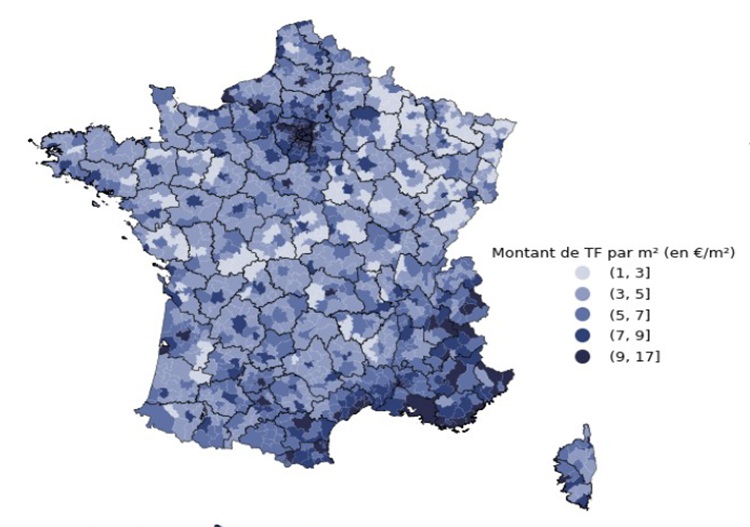
The graphic below shows the average amount payable per square metre (€/m²) by administrative area. Rates range from around €1/m² to €17/m². The highest charges are concentrated in south-eastern France and the Île-de-France region.
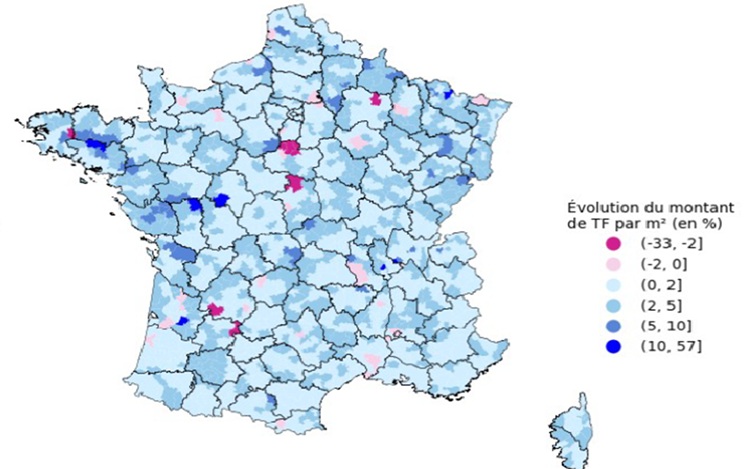
The next graphic shows the percentage change in local tax rates by administrative area. While most regions recorded rises close to the national average, around 40 intercommunal authorities registered a reduction in their rates.
Average Tax by Department
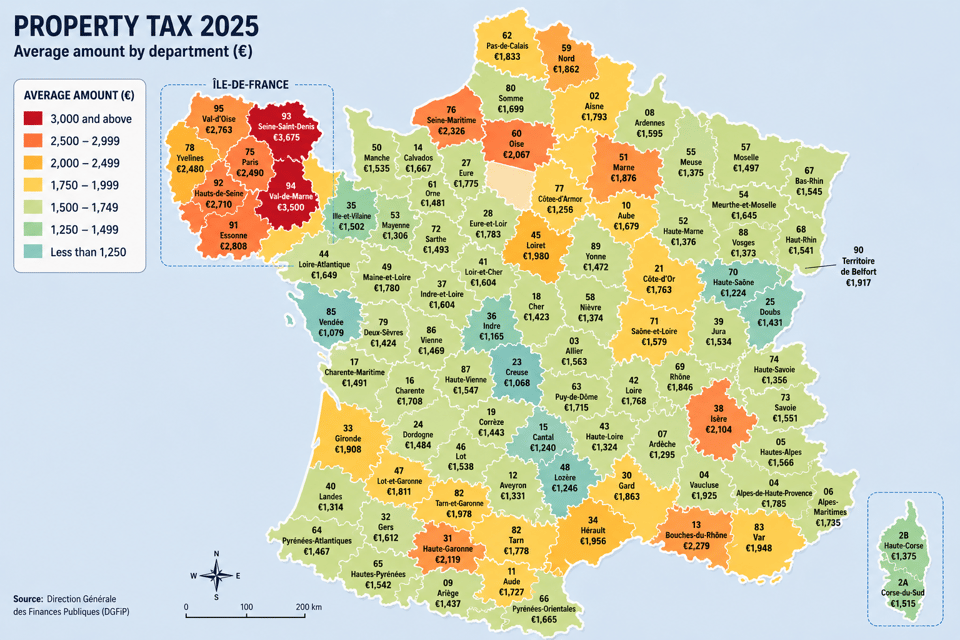
The graphic below shows the average amount of taxe foncière paid per property owner by department in 2025. Actual amounts will vary by property size, amenities and location. Figures include the local waste collection charge (taxe d’enlèvement des ordures ménagères).
Seine-Saint-Denis remained the most expensive department, with an average annual bill of €3,675 per property owner.
Vendée (€1,079) and Creuse (€1,068) recorded among the lowest average property tax bills.
Related Reading: