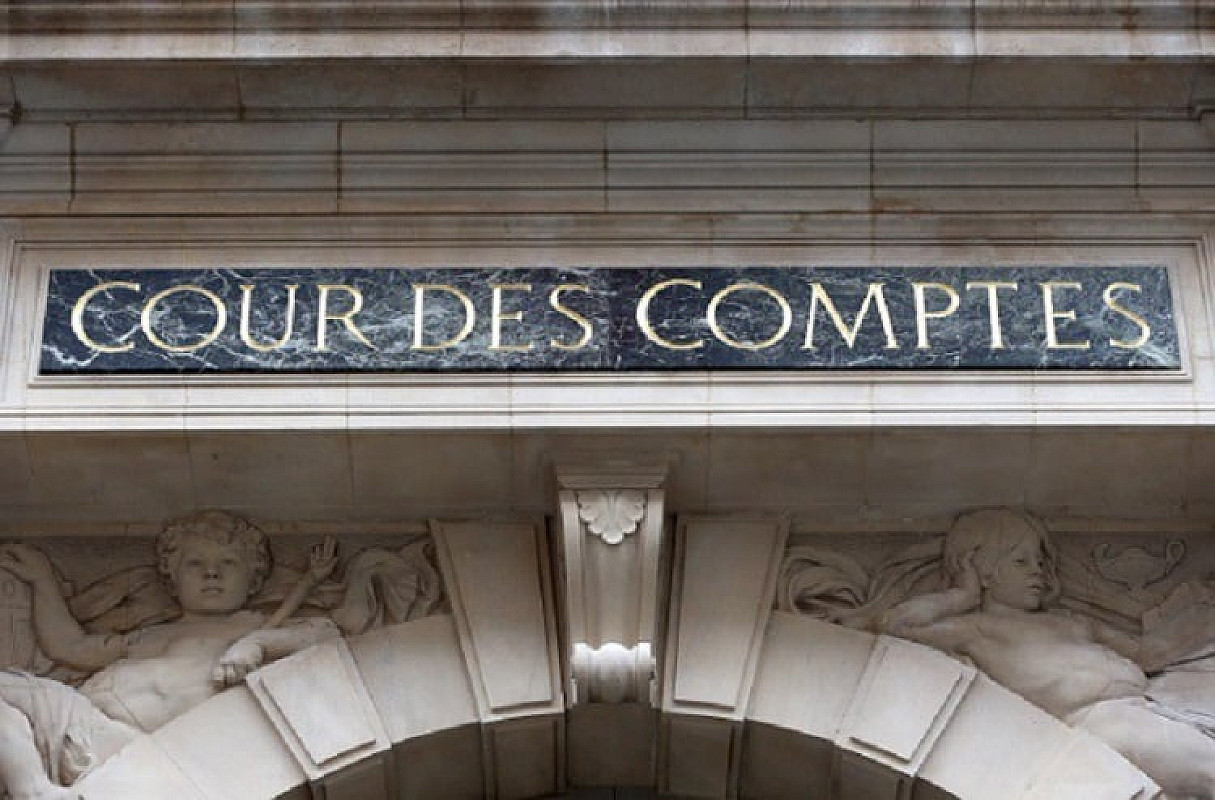
In a report on the state of public finances, the Cour de Comptes states that the poor state of the national accounts is mainly due to the surge in public spending, where previous governments pointed to disappointing revenues. They consider that a continued slippage in 2025 would place the country in a "critical" state.
Pierre Moscovici, the president of the Cour de Comptes stated that it was imperative that spending was reduced.
This year the budget deficit is expected to reach 6% of GDP compared to 4.4% initially planned in the budget. Whilst previous governments have always blamed the slippage on lower than expected receipts the auditors state it is above all the expenses that are at issue. "Public spending is not being controlled, contrary to claims by the government", said Pierre Moscovici, according to whom "in 2024 even more than in 2023, public spending appeared out of control".
In 2024, public spending increased by 1.7% in volume terms, more than GDP growth (1.1%). And even then, this slippage appears more moderate than it is, due to the ending of crisis measures. "What we call the core of spending has increased by 2.7%. This is the most significant increase in the last fifteen years," said Pierre Moscovici.
For the first time since 2020, the ratio of public expenditure to GDP has increased, from 56.4% in 2023 to 56.7% in 2024, a level 7 points higher than the average in the Euro area, and 3 points higher than its pre-Covid level.
Behind this surge, the Court recognises the efforts of the State, but points to the role of local authorities, whose expenditure increased by 3.6% between 2023 and 2024. This increase was due in part to the investments traditionally made to expenditure on the eve of the municipal elections, but also to their operating expenses, which rose by 2.6%. "This is a record for at least ten years," he notes. Spending on social programmess - pensions, medical reimbursements, allowances, etc. - also continued to grow by 3.1% in volume, to reach €756 billion. A pace "much higher than that of GDP", notes the report.
In this context, Pierre Moscovici says he is "worried". For the 2025 budget just adopted, which targets a deficit of 5.4% of GDP, "we are already on a knife's edge," he said.
The adjustment effort is based almost exclusively on tax increases, according to the auditor, who points in passing to the uncertain return of certain measures, such as the surtax on the profits of large companies introduced in the budget.
Although the government continues to tighten its belt, public spending continues to grow by 1.2% in volume, which is even faster than growth. "This course must be interrupted," insists Pierre Moscovici.
Related Reading: