
Arising from a European Directive in 2014, safety tests for two-wheelers of more than 125 cm3 were to be introduced throughout the EU by 1st January 2022.
As with other vehicles in France, the test is required 4 years after the first registration of a motorbike and then at 2-year intervals. Quads and four-wheeler vehicles that can be used on the road without a driving licence are also covered by the law.
In addition to verifying the safety of the bikes on the road, the test is also aimed at reducing air and noise pollution, often exacerbated by modifications carried out on the exhaust system of two-wheelers.
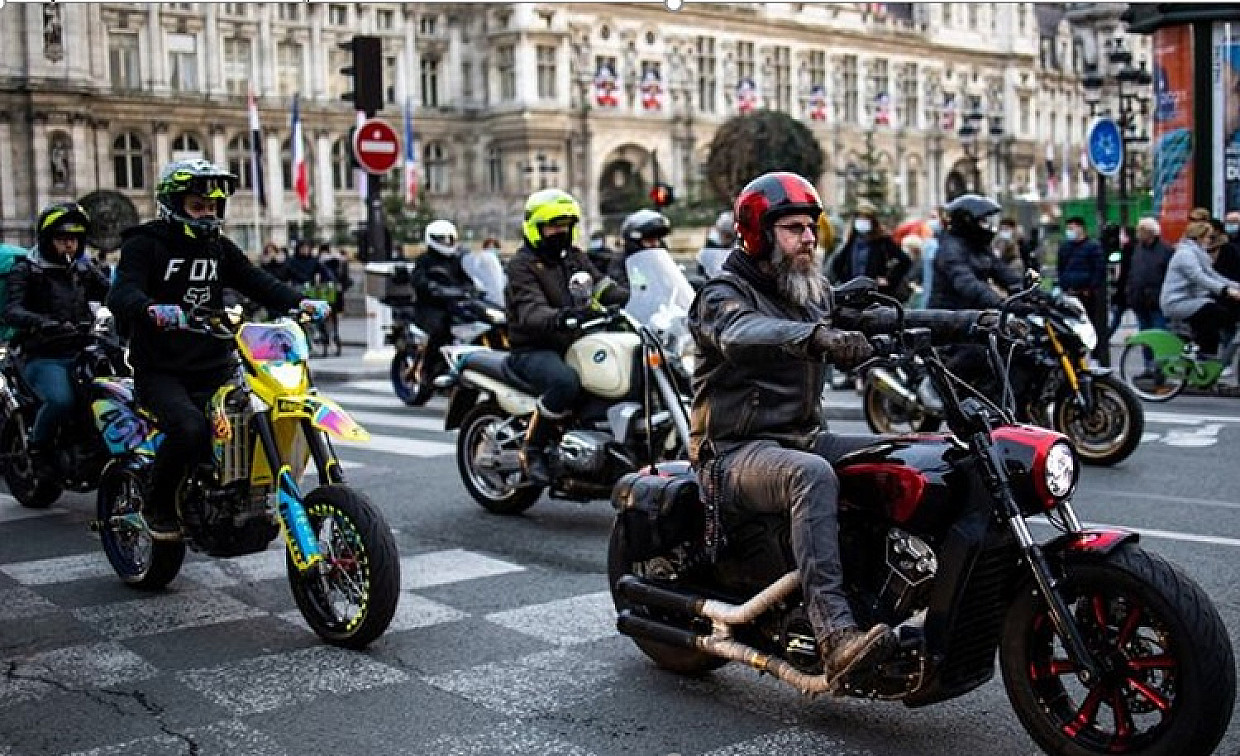
In the face of large protests by the motorbike community, in 2021 the government delayed introduction of the measure stating that they did not wish to "add constraints" at a time when the nation was suffering from the health crisis.
It set a new timetable under which scooters and motorcycles registered before 1 January 2016 must undergo a roadworthiness test in 2023 and between 2024 and 2026 for those registered later.
The European directive provided for the possibility of exemption from the timetable on condition that other alternative effective measures were put in place, and in announcing the delay this was the escape clause used by the government.
Among these new measures proposed were the creation of a conversion premium of up to €6,000 for the purchase of an electric or very low-polluting two-wheeler and the installation of radars to control noise emissions.
Groups opposed to delaying implementation of the new law brought a legal action in the supreme administrative court of France, the Conseil d’Etat, which has now ruled in their favour.
The court stated that the entry into force of the contrôle technique for two-wheelers beyond October 1st is "not justified for the oldest vehicles. In any event, whatever the content of the notified measures, they have not been implemented," the court stated.
Nevertheless, it still remains open to the French government to introduce 'alternative measures' as the court merely ruled that the those promised by the government had not been implemented.
If this occurred, they would be able to maintain the timetable they announced in 2021.
Such measures would need to be notified to the European Commission, but they would not need to be approved by them.
There also remains the issue of whether the test centres are ready, given that most are not equipped for two-wheelers, either in the equipment available or in employees who will have been trained and recruited. Jean-Louis Sobriel, Technical Director at the Dekra chain of test centres has stated: "We must bring all the control centres up to standard. We will need a specific lifting bridge for motorcycles, a special brake bench, and other installations. There are thousands of controllers who need to receive training and there is a shortage of trainers. All very expensive. It's clear that by October it will not be possible."
The day after the decision of the court ruling, Jean-Marc Belotti, of the 'Fédération française des motards en colère', did not seem too concerned by it, stating that "the French government does not want technical control. We have been working with them and the decree on alternative measures is just waiting for publication." If the new government reneges on these commitments, "the bikers will be very angry" and will not hesitate to demonstrate, he warned.
Related Reading: