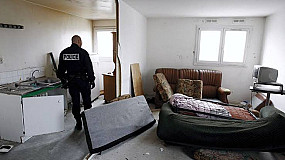


Some international owners who let out property in France on an annual basis will have no doubt encountered the privilege of hosting tenants who believe that rent is an optional concept.
Then, after months (sometimes years) of legal acrobatics, a judge finally orders an eviction, only for the préfet to decide that they are unwilling to provide police assistance to enforce it. Nevertheless, all is not lost, for if the State blocks the eviction, compensation is payable, although when the cheque finally arrives it is often a paltry amount in relation to the costs and losses the landlord may have incurred.
That the State can legally refuse to enforce a ruling of a court is a peculiarly French practice, but it occurs regularly - in around one-third of cases according to the national auditor, the Cour de Comptes.
The préfet may refuse this “concours de la force publique” for humanitarian reasons (age, family situation) or for reasons related to public order.
For years, this administrative veto has left landlords powerless. According to the Senate, refusals vary widely between departments, and many owners give up on claiming compensation due to the procedure’s cost, complexity, and uncertainty. The report considered that the compensation rules were “arbitrary and unequal across the country.”
The injustice of the whole process has finally been recognised by the government, in a reform that clarifies the compensation rules that must now be applied.
The New Rules
The decree sets out the rules governing how to submit a claim, how it is examined, and how damages are assessed.
It does not change the right of the préfet to refuse to provide police assistance to enforce the order for eviction, but it harmonises the way claims should be considered and makes clear that compensation should reflect the actual losses of the landlord.
Under the decree, the liability of the State arises either when the préfet rejects the request for police assistance, or if they do not reply within two months, silence counts as a refusal, and liability begins at the end of that period.
If a refusal happens during the winter eviction moratorium (trêve hivernale), or a court-granted grace period, the State's liability doesn't start until that period ends.
Landlords must send a written compensation request to the préfet responsible for the refusal and attach all evidence proving each element of loss.
Every loss must have a direct and certain link with the refusal to provide police assistance.
The decree explicitly lists damages for which compensation is payable, including:
lost rent and recoverable charges during the specific period the State is liable;
loss of market value in case of a disadvantageous sale;
costs incurred due to inability to sell;
repair and restoration costs;
bailiff (commissaire de justice, formerly huissier) fees;
municipal waste-collection tax;
non-pecuniary losses eg, disruption to living conditions.
Furthermore, compensation is based on the actual rental value, not solely on the lease amount.
The préfet must acknowledge receipt of a claim according to administrative transparency rules.
They must evaluate the State’s liability and propose a compensation amount.
If there is no response within a further two months, the request is considered rejected, and the landlord may appeal before the administrative court.
The response of landlord associations in France has been mixed. Whilst all welcome the initiative, until there has been practical implementation of the law, some remain sceptical that it will guarantee a quick and full payout. Many also continue to consider that the law remains far too weighted in favour of tenants.
Related Reading: