

There is no legal obstacle to a buyer taking possession of a property before the completion date and it is a practice that is surprisingly common.
In French, it is called la prise de possession anticipée.
The arrangement is very often on the basis of an informal agreement between the buyer and seller, but even when it is organised through a notaire, it can unravel.
In a recent case heard in the French Supreme Court, the Cour de Cassation, the sale and purchase contract (compromis de vente) contained a clause that allowed the buyer to occupy the property prior to completion, during which they were also permitted to undertake some renovation works. It was evident from the proceedings that the buyer and seller were acquaintances.
The buyer agreed to pay €800 a month for temporary occupation until completion, envisaged to be several months later, when the charge would be deducted from the sale price.
The contract also stated that in the event the buyer did not complete on the sale, damages of €17,000 were payable (10% of purchase price), and renovation works carried out by them would not be compensated by the seller.
Subsequently, completion failed to take place, and the buyer refused both to pay either the penalty or the occupancy charge, or to immediately vacate the premises.
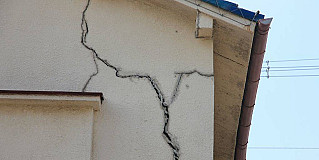
As a result, the sellers brought an action in the courts, when they were granted €44,249 in damages for the 7-month period when the property was occupied, which included the penalty for failure to complete, compensation for non-payment of the occupancy charge and significant damage caused to the property by the occupant from inappropriate and poorly executed building works.
As the owners did not believe they would be able to recover the damages from the former occupant, they bought a legal action against the notaire.
The case ended up in the Cour de Cassation, when the judges ruled that having failed to obtain payment of the security deposit, the notaire was at fault and had failed in their duty of care, stating: "It follows .... that it is incumbent on the notary, who is required to ensure the validity and effectiveness of the document drawn up, to insert in a preliminary promise of sale a clause stipulating the remittance of a security deposit by the beneficiary authorised to enter the premises before the regularisation of the sale by notarial act, in order to cover the risks of deterioration and to facilitate the recovery of the deposit, along with a stipulation providing for the payment of the property deposit as soon as the promise is signed."
In this case, the sellers won their case but only having pursued their litigation right to the final court in the land.
As a general rule, notaires are not in favour of letting buyers move into a property until after completion has taken place. If the parties wish it, then it merits a formal agreement, called a convention d’occupation anticipée. Such an agreement can be included in the compromis de vente.
The document should state the terms of the occupation, as with any other rental agreement. It might also be advisable to discuss any tax implications with the notaire.
The lesson appears to be that when it works, early occupation can benefit all concerned. But clearly there are risks, and they increase exponentially when informal agreements are made between acquaintances or friends with nothing in writing.
Related Reading: