
The dominant nature of the French State is apparent not only in the control exercised by central government over civil life, but also in the multiple tiers of local government.
The country has more local councils and more layers of administration than any other country in Europe, made up of municipal councils, inter-communal councils, departments and regions. Many of the municipal town halls have a population of less than 200 inhabitants. Some have less than 10.
In total, France has nearly 35,000 local municipal councils and 459,000 councillors, far outstripping any other country in Europe.
Some rationalisation of the structure took place in 2015 when the 22 regional councils were reduced to 13.
The then president, Nicolas Sarkozy, also flirted with abolishing the departmental councils, in favour of the regional councils, but retreated in the face of strong opposition from local politicians.
The idea has, however, been resurrected by President Macron, who has made clear his wish to rationalise the "millefeuille territorial" of the country. He has recently commissioned yet a further inquiry into the issue.
Whilst there is a strong cultural attachment to communes, as a branch of government the smaller councils have become an anachronism, lacking the scale to deal with modern challenges.
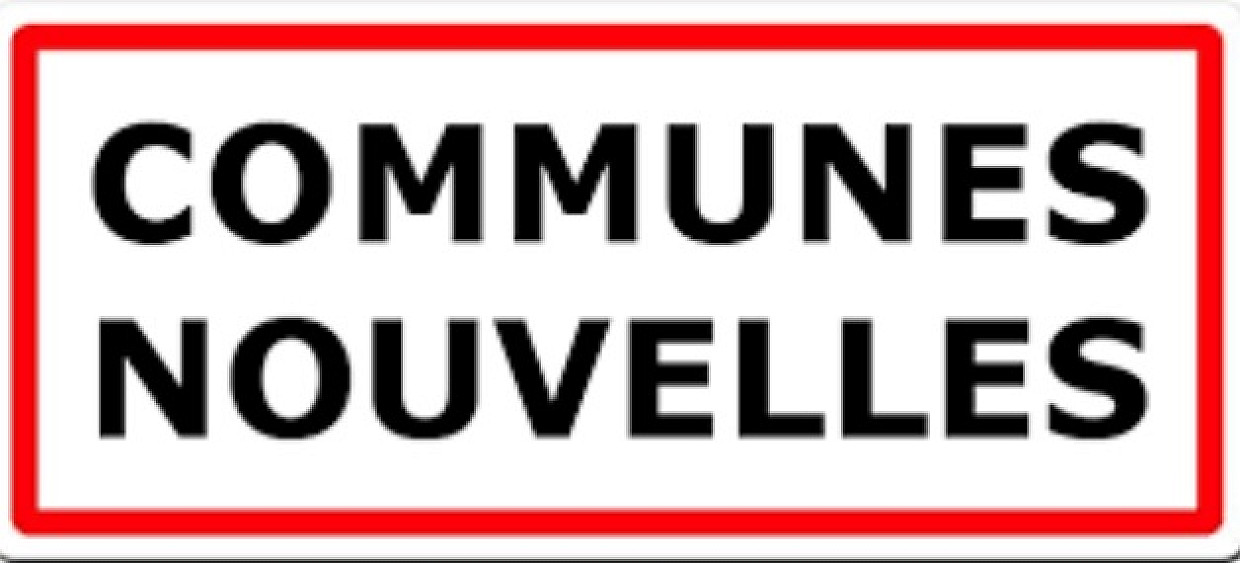
As a result, since 1971 successive governments have encouraged stronger inter-communal cooperation, a process that in 2010 moved up a gear with a law that established a clearer legal and financial framework for the merger of municipal councils.
Progress has, however, been slow. Whilst several large new 'metropoles' are now in place, the municipal structure in rural areas remains largely intact, save that most of the councils are now also part of an inter-communal structure.
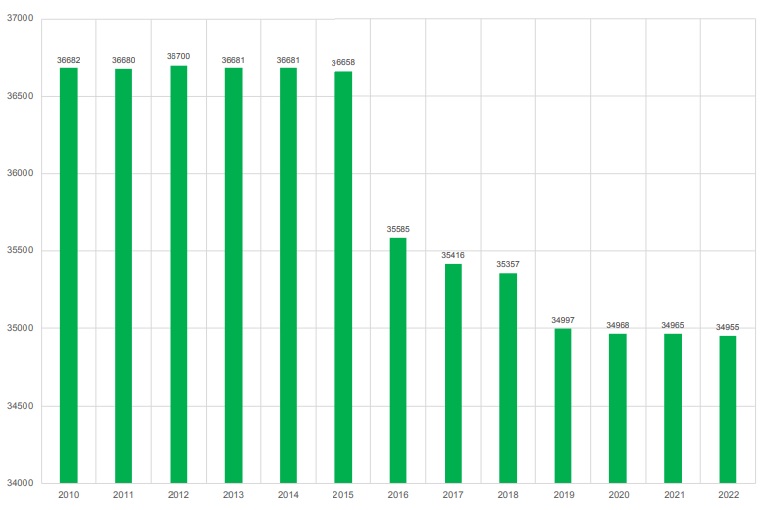
To date nearly 800 municipal councils have merged, from over 2,500 existing councils, reducing the number of local councils in France from 36,682 in 2010 to around 34,955 at the end of 2022.
Nevertheless, as can be seen from the graphic below, over the past few years very few mergers have taken place. Last year there were only 8, although there are around 60 currently under consideration.
The creation of inter-communal councils has also created yet another layer of local government, and it is the intention of the government that these are eventually superceded by the merger of their constituent parts.
In order to encourage councils to act, the government have put in place a financial package to meet any additional costs that may be incurred.
The draft budget for next year provides seed money of €10 per inhabitant for the new municipality, which would remain in place for the first 3 years of its creation. That is a significant increase on the existing support of €6 per inhabitant.
The offer also includes a 'guaranteed' part protecting the new municipalities against any reduction in their overall operating grant.
As well as financial incentives, the government is gradually stripping smaller councils of their powers, notably in relation to water and drainage, responsibility for which is being transferred to inter-communal councils.
Small communes may well continue to exist in the future, but with what administrative responsibilities?