
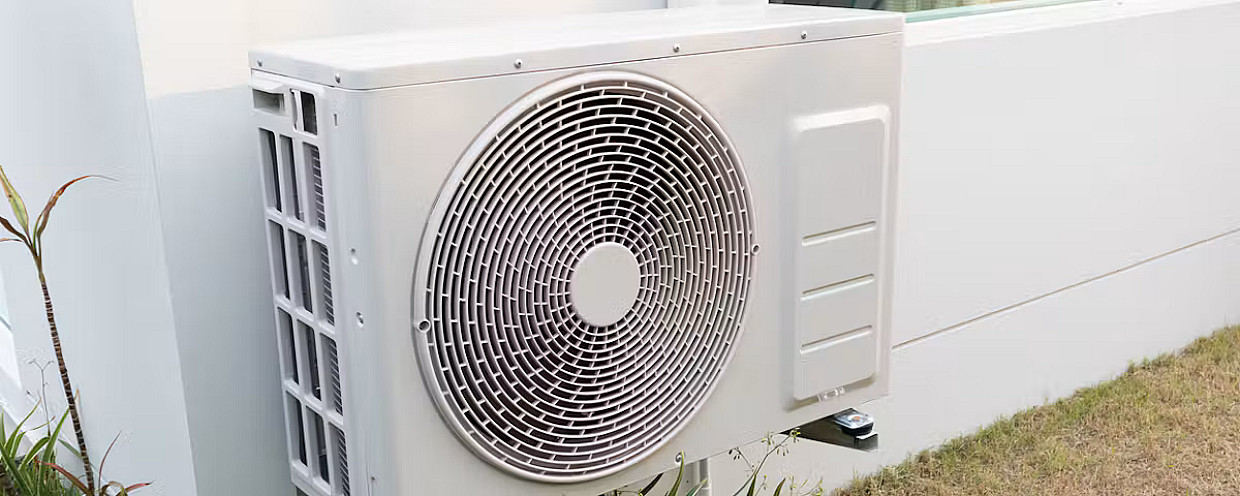
The scheme is intended to help households replace older gas or oil boilers with heat pumps.
The programme is expected to provide an average benefit of around €9,800 per household, with total funding of approximately €540 million.
Importantly, the scheme is being financed by the energy suppliers through the Certificats d'économies d'énergie (CEE) system rather than directly from the State budget.
Under the CEE system, energy suppliers and distributors are required to finance measures that improve energy efficiency. Companies such as EDF, Engie and TotalEnergies therefore contribute to the financing of qualifying energy-saving measures. In practice, the costs fall on all consumers, through increased energy prices.
The Scheme
The scheme is aimed at owners of individual houses where the household, as classified by the French housing agency Anah, has a ‘modest’ or ‘very modest’ income.
The maximum income thresholds vary by size of household and location, as follows.
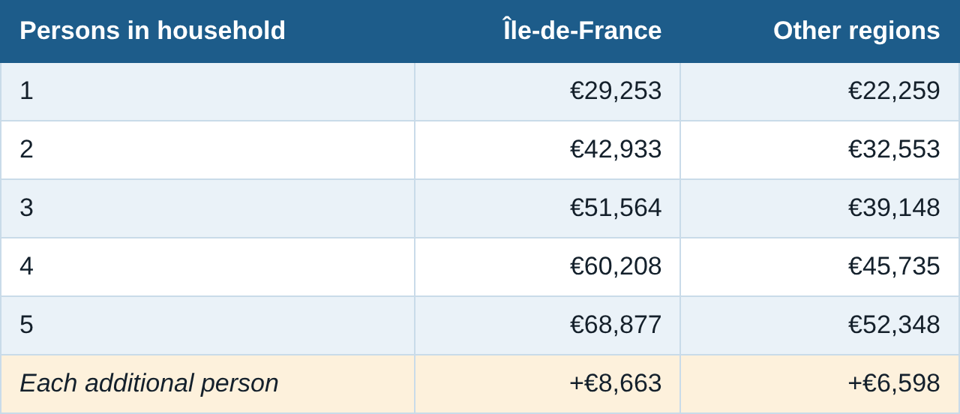
For 2026, the test is based on household reference tax income (revenu fiscal de référence) for 2025.
The property must be the household's main residence, and the heat pump must replace an existing gas or oil boiler. Tenants and apartment owners are not eligible.
The scheme is designed as a single, integrated package rather than simply a loan to buy a heat pump.
The package can include:
financing for the heat pump (pompe à chaleur PAC);
installation by a qualified green energy (RGE) professional;
maintenance;
electricity supply for the heat pump.
The household pays a single monthly amount for 3 years, which may be extended to 5 years.
The government's objective is that “the overall monthly payment after work should be less than or equal to the monthly energy expenditure of the household before the work.”
This means that the scheme is intended to remove the substantial upfront installation cost of the change, making it low risk.
An air-to-water heat pump can cost up to €15,000, although the actual cost varies considerably according to the property and installation required.
The government expects the household's heating costs to fall significantly once the system is fully installed and operating.
The savings will depend on the property, insulation, existing heating consumption, electricity prices and the performance of the heat pump.
Not every house will be suitable, and the consortium carries out a technical study first.
The fine print of the costs and the expected savings will need to be carefully reviewed.
Application Process
The government has initially selected seven groups of companies to develop and offer the scheme.
The list of consortiums and websites for an application can be found at Liste des lauréats.
There is no single form or application process. You need to make contact with one of the consortiums who each have their own application process.
Further operators are expected to be able to offer similar packages from January 2027.
Related Reading: