
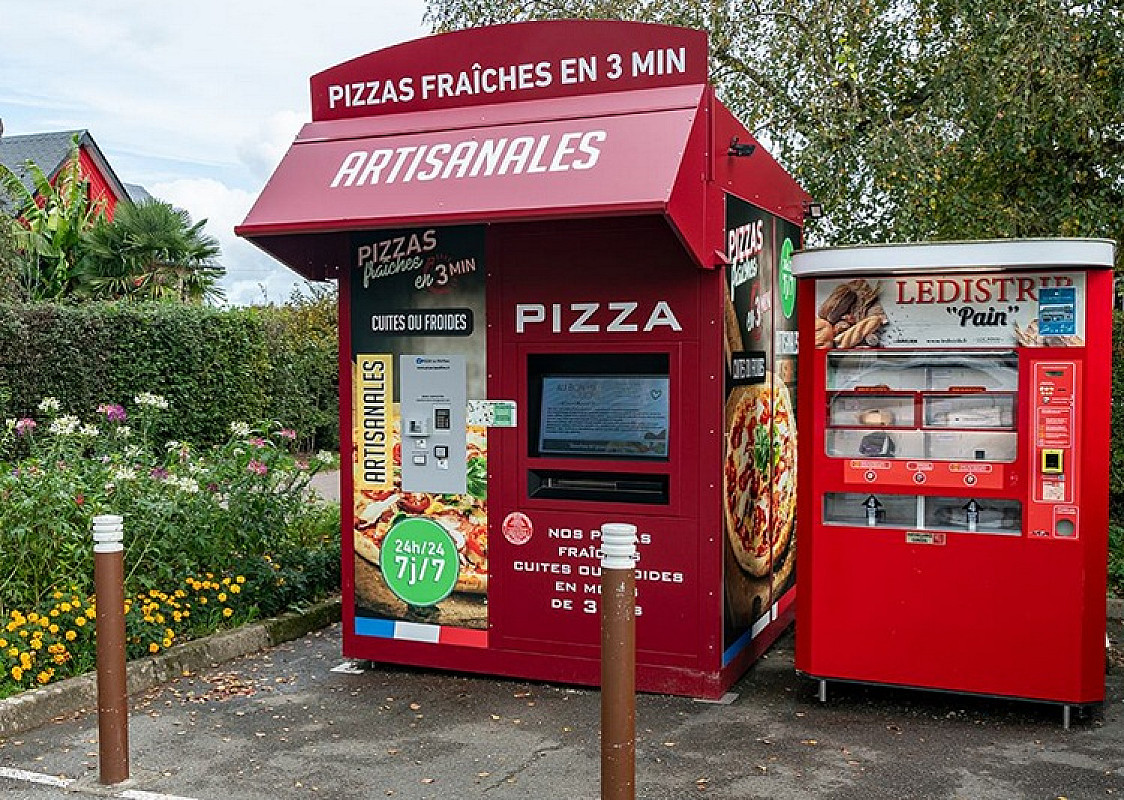
Across the country, automatic parcel lockers, pizza dispensers, baguette machines and refrigerated click-and-collect terminals are appearing at a pace that many local elected officials say borders on the anarchic.
With e-commerce booming and new delivery models proliferating, the urban landscape is being transformed, often without the town halls’ knowledge.
Politicians across France are reporting many instances of vending machines appearing in their locality, including a Finistère mayor who learned on Facebook that a bank ATM and food distributor had been installed in his municipality. Mélanie Thomin, Socialist MP and president of the small towns association (ANPP), calls the situation “a dazzling expansion of unregulated facilities”. She has introduced a bill in the French Parliament to require planning permission for any new automatic parcel, food or cash-dispensing device installed on public or private land.
Her concern is not only administrative. In small towns, automated distributors can create sudden and unfair competition for local businesses. “In Finistère, the mayor saw the impact on the main-street restaurant and even on the food trucks operating only on market days,” Thomin explains. For small-town restaurateurs and shopkeepers, even a single vending machine can divert already fragile footfall.
The growth figures give substance to the mayors’ anxiety. E-commerce parcel volumes in France have risen steadily, and with them the demand for pick-up alternatives to home delivery. According to the most recent Geopost “European e-shopper” barometer, France has witnessed a 9% increase in parcel-locker deliveries in a single year. With 57% of French online shoppers favouring relay points hosted by merchants—far above the European average of 24%—operators are racing to expand both relay shops and automated lockers.
Mondial Relay offers the most striking example. Between 2021 and 2025, its locker network exploded from 300 to 9,000 installations. In parallel, the company terminated contracts with 3,500 merchant-hosted relay points—sparked, according to some retail associations, by a strategic shift toward automation, which reduces operating costs but sidelines long-standing local partners.
Geopost’s PickUp network now aims for 9,000 lockers by the end of 2026, including the growing category of “Fresh” refrigerated units intended for groceries and prepared meals ordered online.
The technology’s convenience is undeniable. Automated lockers are accessible 24/7, reduce delivery failure rates and allow carriers to consolidate drop-offs. But the model also threatens the economic ecosystem built around merchant relay points, which can earn several hundred euros a month—income that, for small businesses, often covers a significant share of rent or utilities.
For mayors, however, the issue extends beyond commercial impact. The devices—often brightly lit and installed in car parks, petrol stations, laundromats or supermarket edges—reshape streetscapes, alter circulation patterns and consume public space without contributing to local budgets.
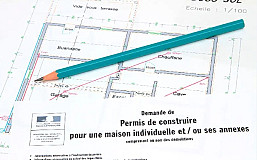
Thomin’s bill seeks to reintroduce order by making the installation of all lockers subject to planning consent. The bill also proposes that the operators pay a fee to the local council.
Urban planning experts note that France is not alone in grappling with the phenomenon. Many European municipalities have begun integrating automated retail into zoning plans, requiring design standards or limiting concentration in historic centres.
Local mayors argue that without oversight, they risk undermining the very local economies and public spaces that give rural and suburban France its vitality.
Related Reading: