
In recent years, mainly driven by the European Commission, the French government have done much to increase bank transparency, press down on charges, and encourage greater competition.
Amongst the key developments has been the requirement for banks to use a common terminology for their main charges and to require them to ensure clients have better information on charges they incur.
Last year banks gave an undertaking to cap rises at 2% in 2023 and a new comparison study carried out by the consumer body CLCV (Consommation Logement Cadre de Vie) suggests that their promise is holding up.
Nevertheless, the study showed that this had not stopped banks changing their offers, or imposing charges for a wide range of different services.
Researchers found that the average number of tariffs in bank brochures was 331. Some banks completely drowned consumers under the weight of information: the brochure of charges from Société Générale ran to 55 pages, and that of the Caisse d’épargne Grand Est contained no less than 612 charges.
In reviewing the level of charges payable, CLCV considered the charges for three different customer profiles - light, medium and heavy users of banking services.
-
Light users – who typically pay for one current account, online access, a debit card, up to 6 standing orders per month, and up to 8 cash withdrawals a month. The average level of charges per year for this group was €67, a figure that remains unchanged over last year.
-
Medium users - who pay for shared accounts, online access, two debit/credit cards which are both insured for loss and theft, up to 16 withdrawals a month, and multiple standing orders. The average level of charges per year for this group was €149, an increase of 1.24% over last year.
-
Heavy users – who pay for shared accounts, online access, two gold debit/credit cards insured against loss and theft, 16 or more withdrawals a month, multiple standing orders and multiple one-off payments per month. The average level of charges per year for this group was €208, an increase of 0.90% over last year.
Overall, bank charges for a similar basket of services can be as much as twice as expensive in one bank as in another. The banks which were cheapest for all users were La Banque Postale, Crédit Coopératif, and Crédit Agricole. The three most expensive for all customer types were the boutique banks of Banque de Savoie, Banque Dupuy de Parseval, and Banque Marze.
There are also regional differences in the pricing structures of some banks, so tariffs charged, for instance, by Credit Agricole are not the same across the regions.
The survey found that average regional charges varied substantially, ranging, for instance, for medium users from €141,67 in the Sarthe department up to €167,98 in Pyrénées Orientales. Heavy users in the department pay on average a whopping €225,78.
Whilst the banks continue to allow customers free withdrawals at competitors' cash dispensers they have reduced their frequency, and there are fewer discount prices for a second card on the same current account.
Many banks have withdrawn their cheaper insurance offers in favour of their fully comprehensive products.
The study offered a word of warning about the 'package' offers, which can be up to three times more expensive than services offered 'à la carte', particularly for light users. This is because the packages often include a wide range of offers, including very rarely used services, as well as services which are normally free.
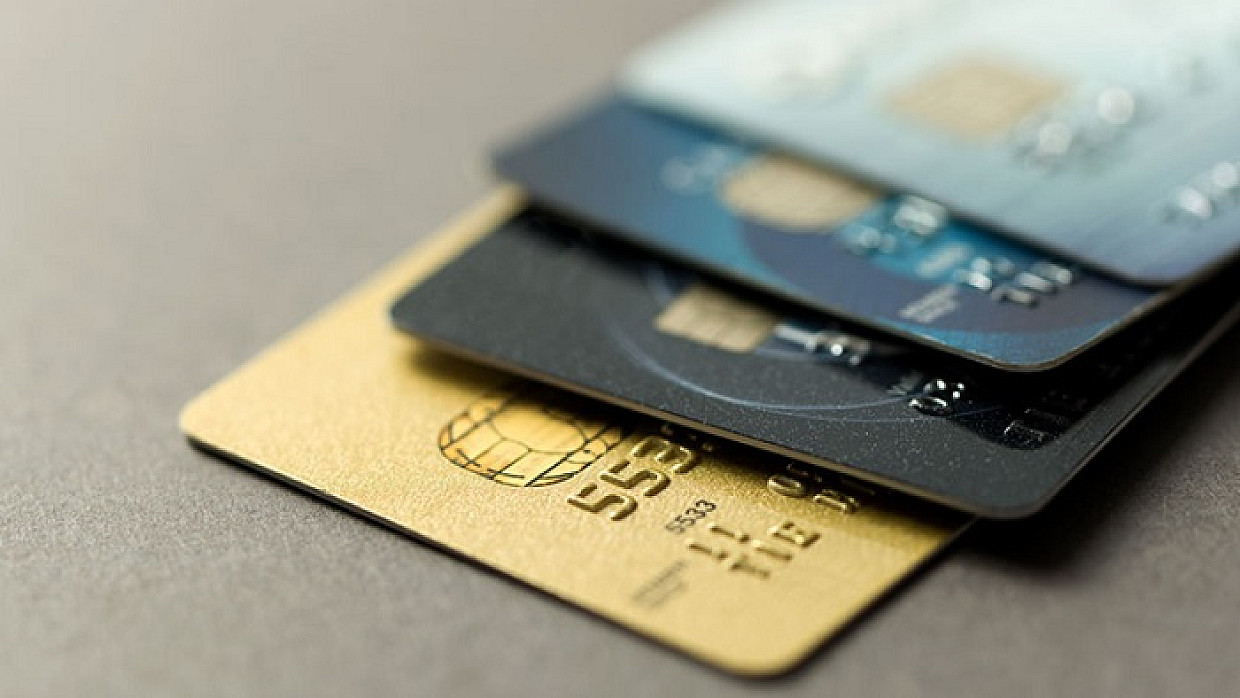
The average cost of a Visa or Mastercard card has remained relatively stable, at around €45 a year per card, rising to around €130 for a Visa Premier or Gold card.
Most banks also provide local cost options, such as a basic debit card, called 'carte à autorisation systématique' which verifies the cardholder's balance before authorising each payment or withdrawal. The average cost is around €31 a month.
For clients who are in a ‘financially fragile situation’ (Offre Clientèle Fragile - OCF) bank charges are capped at €3 a month. This has now decreased to €1 a month, but many banks offer OCF accounts free of charge.
On-Line Banks
Not surprisingly, the study found that banking online is cheaper than using a high street branch, a conclusion that was also shared in 2021 by the government banking agency, the Observatoire des tarifs bancaires.
On-line banks do not usually charge for operating a current account, supplying a bank card, making international payments in euros, or most other services conducted online by the account holder, and this has not changed.
Whilst for non-residents opening an account with a high street bank can be difficult (particularly for US residents) this is less the case with the on-line banks.
One of the cheapest on-line banks in the study was Boursorama, with many services offered gratis, including a free debit card. Fortuneo offers a free bank card to customers who deposit more than €1,800 per month; BforBank offers the same to customers who deposit more than €1,200 per month. Hello Bank also offers a free bank card. Orange Bank charges €7.99 per month, and Monabanq costs €9 a month.
The study did not consider tariffs or services provided by money transfer services such as Wise and Revolut, which both offer debit cards as well as competitive foreign exchange services. As with the on-line banks, both also allow non-residents to open an account.
A distinct and rather expensive charging regime operates for business users in France, who hold a compte professionnel. However, for unincorporated businesses such accounts are not mandatory, and the use of a single, separate personal account for business transactions is generally cheaper.
.
Related Reading: