
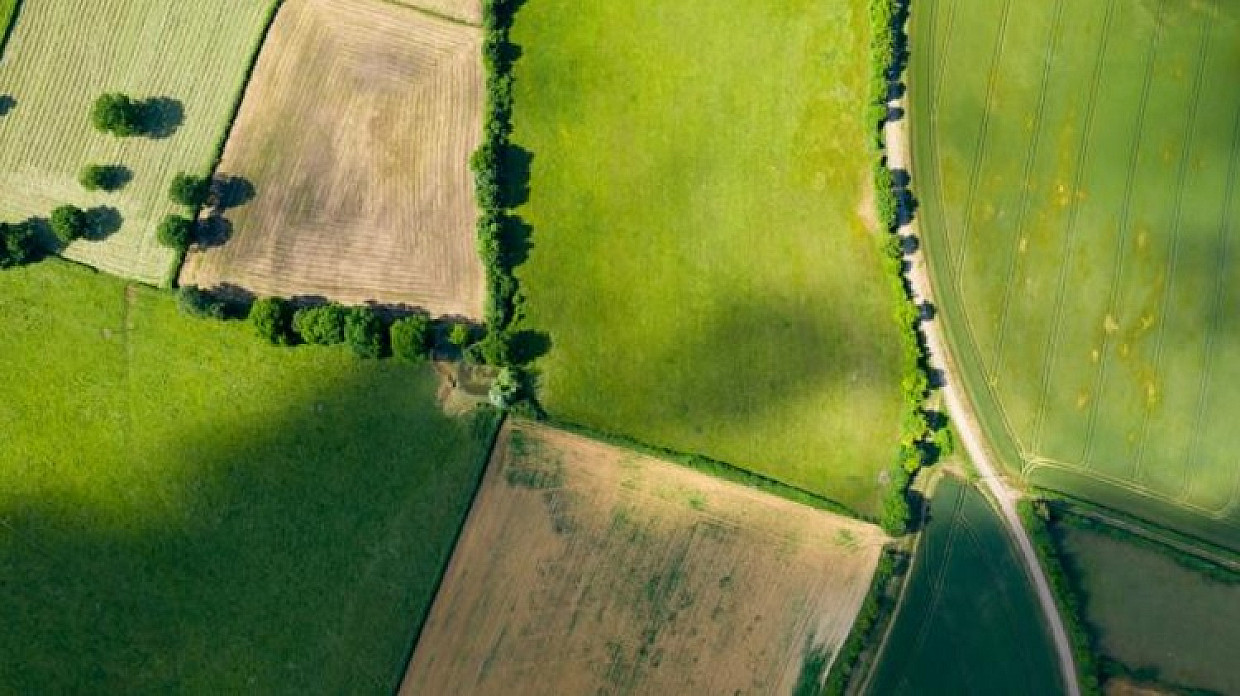
Under the plan the government is proposing that 50,000 km of hedgerows be planted by the end of the decade.
This follows publication of a report highlighting the significant post-WW2 loss of hedgerows in France.
According to the report, 70% of hedgerows have disappeared since 1950, equivalent to 1.4m kilometres.
Each year around 20,000 km of hedges are lost, due, in the main, to the enlargement of agricultural parcels.
Far from slowing down, in recent years the movement has accelerated, with the loss of 23,571 km/year between 2017 and 2021, compared to 10,400 km/year between 2006 and 2014.
Although a relatively modest programme of new planting is already in place, the report states that the main need is to protect the existing network of hedgerows.
"Faced with increasingly intense and frequent climatic hazards, hedgerows and trees represent a real solution", recall the authors, citing "agronomic benefits" (windbreak effect, shade for livestock, erosion control, shelter for predators of pests ...) and "ecosystem services" (carbon storage, water regulation, preservation of biodiversity...).
That message has been accepted by the government, although the plan is short on detail about how to prevent existing hedgerows from being removed. In this respect the law in France is well-behind many other European countries where there are stronger controls on the preservation of hedges.
Announcing the plan the Agriculture Minister Marc Fesneau stated that: "Hedgerows are an essential component of the diversity and identity of French landscapes. Natural habitat for many species, agricultural auxiliary, biomass resource and heritage element, hedgerows provide multiple services to nature and human societies."
To plant 50,000 km of hedgerows by 2030, the government will budget an extra €110 million in 2024, in addition to already existing public funding.
The plan includes establishing a 'hedgerow observatory' and mobilising the various parties involved, as well as developing the planning structure. There is also talk of using tax credits, which are currently available, but only vague references about using the law to protect existing hedgerows or sanctions on farmers for who remove hedgerows.
In response to the announcement, the radical small farmers association, the Confédération paysanne, stated that: "A plan that does not stop the uprooting of hedges is a waste of time. It will inevitably lead to the failure of the plan and to the pointless use of the public funds invested in it."
The success of the project will also depend on the willingness of farmers to allow hedge planting on their land but widespread support for it seems unlikely.