
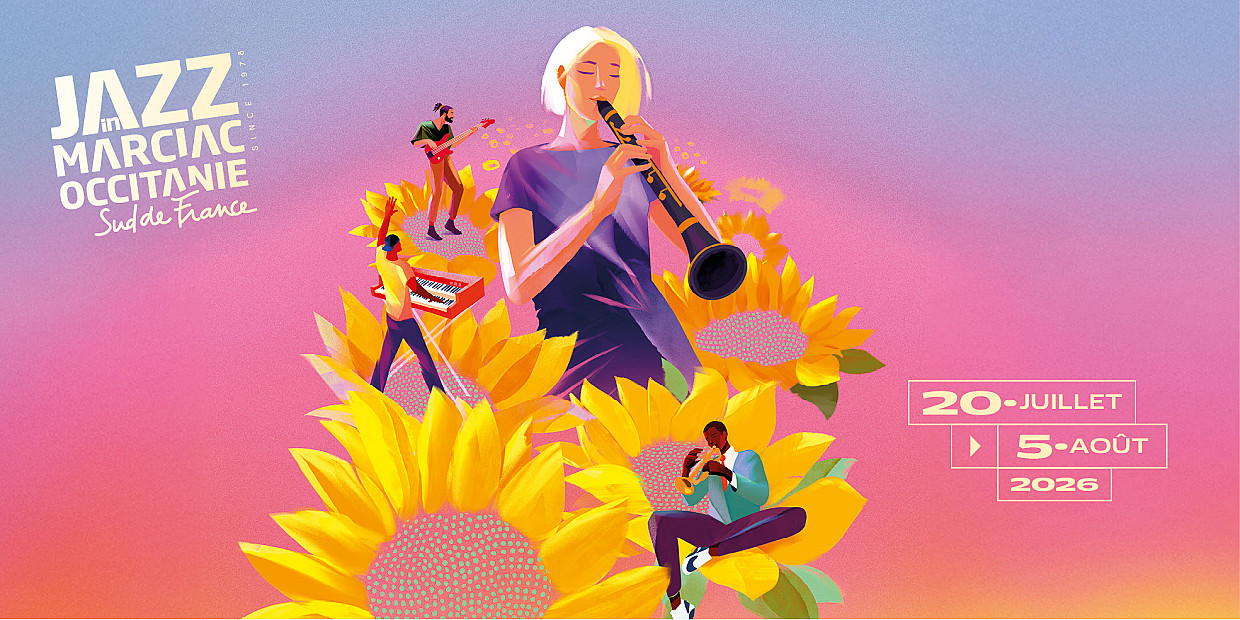
For just over two weeks, the population of Marciac swells from little more than 1,200 residents to around 200,000 visitors, drawn by a festival that has become one of the most respected events on the international jazz calendar.
This year, Sting headlines the programme with his Sting 3.0 tour, one of the most sought-after tickets of the French summer and sold out months in advance.
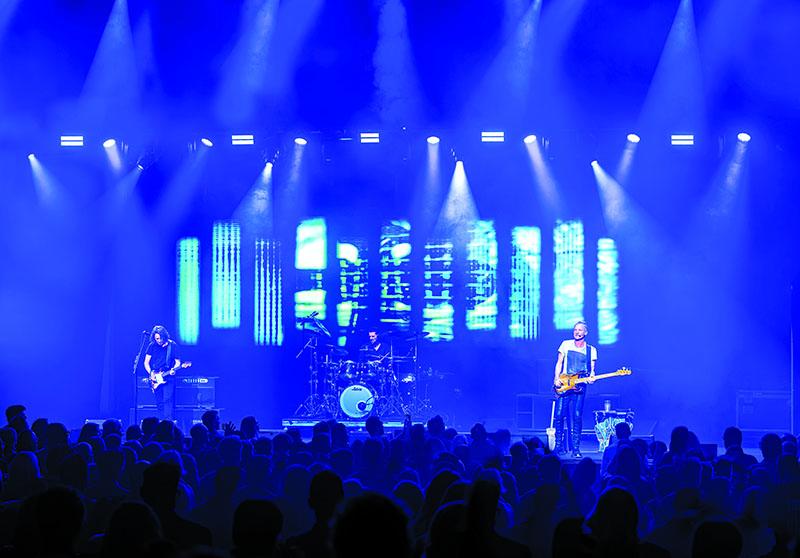
For many festival-goers, that booking alone confirms that Jazz in Marciac is no longer simply a jazz festival. It has become one of the major music events in Europe.
A Festival Born from One Man’s Vision
The story is almost unbelievable.
Jazz in Marciac began in 1978 when local schoolteacher and jazz enthusiast Jean‑Louis Guilhaumon persuaded a handful of musicians to perform in the village square. Nearly fifty years later, Guilhaumon remains closely associated with the festival that transformed his hometown and served for three decades as Mayor of Marciac.
Today the event attracts visitors from across Europe, North America and Asia and is regularly mentioned alongside Montreux Jazz Festival and North Sea Jazz Festival as one of the continent’s premier jazz gatherings.
The list of past performers reads like a history of modern jazz: Art Blakey, Lionel Hampton, Stan Getz, Oscar Peterson, Keith Jarrett, Chick Corea, Wynton Marsalis, Herbie Hancock, Ray Charles and Nina Simone among many others.
The 2026 Line‑Up
This year’s programme is among the strongest for many years.
Alongside Sting, the festival welcomes Pat Metheny, Diana Krall, Marcus Miller, Kenny Garrett, Kenny Barron, Richard Bona, Avishai Cohen Trio, Samara Joy, Fred Hersch, Cécile McLorin Salvant, James Carter, Ibrahim Maalouf, Roberto Fonseca, Erik Truffaz and Chris Minh Doky.
The festival also continues its tradition of reaching beyond strict jazz boundaries. This year’s broader programme includes Kool & the Gang, Keziah Jones, Asaf Avidan, Selah Sue, Imany, Thomas Dutronc and Feu! Chatterton.
Evening concerts take place beneath the festival’s famous 6,000-seat Chapiteau, the vast marquee erected beside the village rugby ground. Yet many regulars insist the real magic happens during the day, when free concerts fill the medieval square and music spills from cafés, wine bars and temporary stages across the village.
More Than a Festival
What makes Marciac remarkable is not simply the quality of the programme but the scale of its impact on a rural community.
Independent studies have estimated that the festival generates tens of millions of euros for the local economy each year through accommodation, restaurants, retail spending and tourism.
The benefits are visible everywhere. The historic centre has been carefully restored, accommodation capacity has expanded around the village lake, and Marciac has become a year-round cultural destination rather than a place that comes alive only in summer.
When the local school once faced closure because of falling pupil numbers, Jean‑Louis Guilhaumon introduced specialist jazz education. The initiative proved so successful that the school survived and eventually expanded. Today the village has its own music school, the Astrada, which hosts performances throughout the year, and educational programmes attracting young musicians from across France.
Powered by Volunteers
Despite its international reputation, Jazz in Marciac remains deeply rooted in local life.
Around 1,000 volunteers help run the festival every year, welcoming visitors, stewarding concerts, serving food and drinks and supporting the dozens of events that take place across the village.
That community involvement helps explain why the festival still feels authentic despite its size. Visitors come not only for the music but also for the atmosphere of Gascony itself: Armagnac producers, duck farmers, cheese makers and local winegrowers all become part of the festival experience.
A Model for Rural Europe
At a time when many European rural communities struggle with declining populations and disappearing services, Marciac has become a frequently cited example of successful cultural regeneration.
The festival has helped sustain employment, attract investment, support local businesses and maintain public services that villages of similar size have often lost.
It has also drawn a substantial international community, including British, Dutch and Belgian residents who first discovered the Gers through the festival before deciding to settle permanently in the region.
For anyone spending the summer in south-west France, whether resident or holidaymaker, Jazz in Marciac is far more than a series of concerts. It is one of Europe’s finest celebrations of music and one of the clearest demonstrations of how culture can breathe new life into a rural community.
23 July – 7 August 2026
Marciac, Gers, Occitanie