
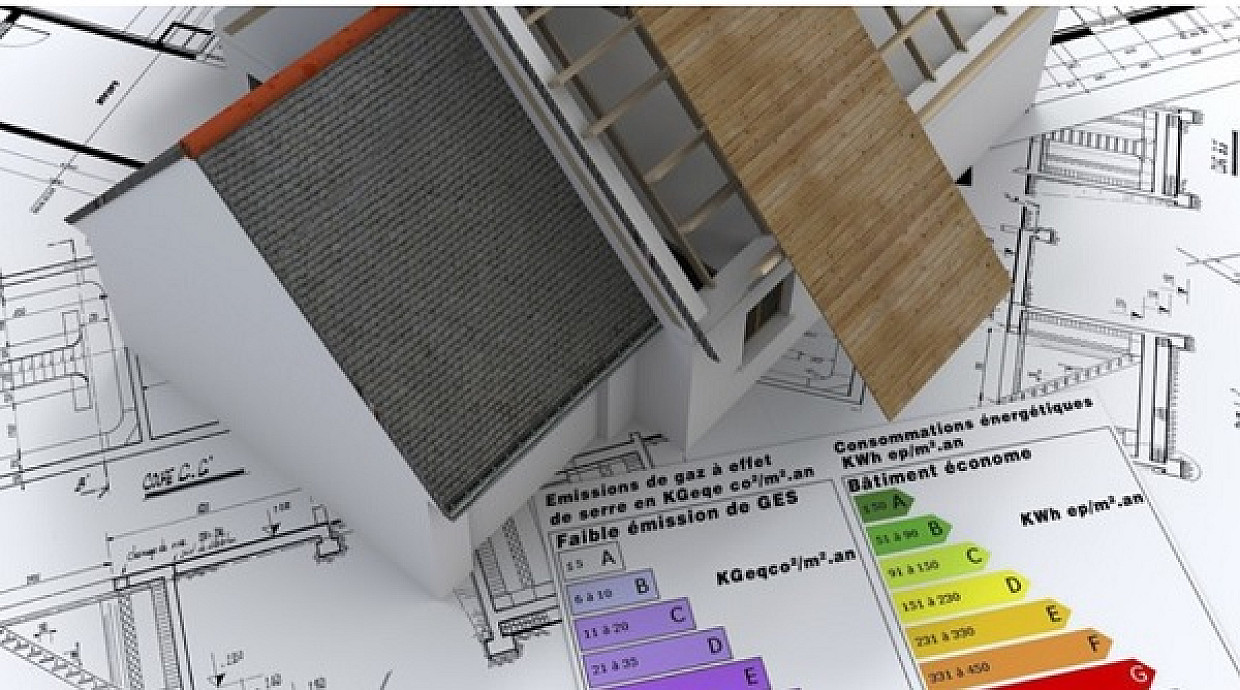
Since 1st April, as part of the sale process of real estate in France, an energy audit must be carried out on those properties with a low energy efficiency performance rating. It currently applies to properties rated either F or G.
From 1st Jan 2025 all sale properties classified E will also need to have an audit, and from 2034 it will apply to those with a D rating.
The only exclusions permitted are apartment blocks (copropriétés).
According to the government, at least 20% of the housing stock has an F or G rating, although many commentators consider the figure is likely to be far higher. In Paris, for instance, at least a third of the housing stock is considered below par.
The energy audit should not be confused with the statutory survey on energy performance (Diagnostic de Performance Energétique – DPE) that is also obligatory in the sale process.
That survey merely gives the property an energy rating. The purpose of the more substantial audit énergétique is to specify the works that are required to bring the property up to a satisfactory energy performance level.
As a result, potential buyers will then be informed of the works required and the cost of undertaking those works, as well as the grants and other forms of financial assistance available.
The cost of the audit, which is the responsibility of the seller, is no bagatelle. It will depend on the size, type and location of the property, but for most properties it will be at least €1,000.
When to that is added at least several hundred euros for the Dossier de Diagnostic Technique (DDT) that must be carried out the numbers start to stack up.
The audit has a validity period of 5 years, whilst the DPE is 10 years.
As a result, estate agents are already expressing concern that many potential sellers are reluctant to put their property on the market. The industry has been reporting for months that there is a shortage of properties for sale.
And it is probably not only the costs of the audit that are making sellers hesitate about selling their property, but the potential implications on the sale price if classified as a property with a low energy rating, a ‘passoire thermique’.
The energy audit must provide an estimate of costs to bring the property to at least a standard B rating.
The costs of doing so will often run in to tens of thousands of euros, in some cases over €100,000.
There is no obligation on the seller to carry out these works prior to sale of the property, although that topic is being considered by the European Commission.
Neither are buyers obliged by the audit. Nevertheless, such prospective costs are bound to make many of them think twice about the purchase, and at least provide them with the ammunition they need to liberate the purchase price.
Although there are means-tested grants available, the system is complex, as we reported in our article Home Energy Efficiency Grants 2023.
Similarly, the installation of green energy heating in homes does not always make sense in older homes. Reports are widespread of households who have undertaken such works, only to find that their heat pump is inadequate and far more expensive to run than they were led to believe. Those who have installed pellet stoves are also finding the cost of the wood pellets has risen substantially and that storage of the pellets is complicated.
Some commentators have therefore talked of a ‘bombe sociale’ waiting in the wings due to the potential impact on the value of homes at the bottom of the market which occupants will be unable to renovate.
There is some relief available in that the works recommended in the audit must not be disproportionate to the value of the property. There is also dispensation where there are technical, architectural or heritage constraints that do not permit the achievement of a B rating. In such cases the minimum standard to be achieved is lowered to C, or a gain of at least two ratings. However, the conditions to gain such an exemption are tough; in the former case the cost of the works must be more than 50% of the value of the property and in the latter case only properties with special architectural interest are exempt.
Not only is there hesitancy amongst many sellers about the audits, but there is currently a shortage of trained technicians to carry them out, with some reports estimating the number of those fully trained to be only 25% of what is required. A list of qualified technicians can be found at L'annuaire des professionnels qualifiés.
As the law makes the technician responsible for the result, not all technicians are that keen to become qualified. If the new owner finds the audit to be defective in a material way, they would be entitled to bring a legal action against the technician and (potentially) the owner.
As has occurred with the energy rating survey, other commentators have expressed concern about the lack of consistency in the audits, and therefore their unreliability, due to the complexities of the model used, as well as the lack of information on the property (wall thickness, materials used).
All of this is also impacting on the rental market. Since summer 2022 the rents of properties with a F or G energy rating have been frozen, and since 1st January 2023 properties classed G cannot be rented out. In 2025 F rated properties will be excluded from the rental market.
Related Reading: