

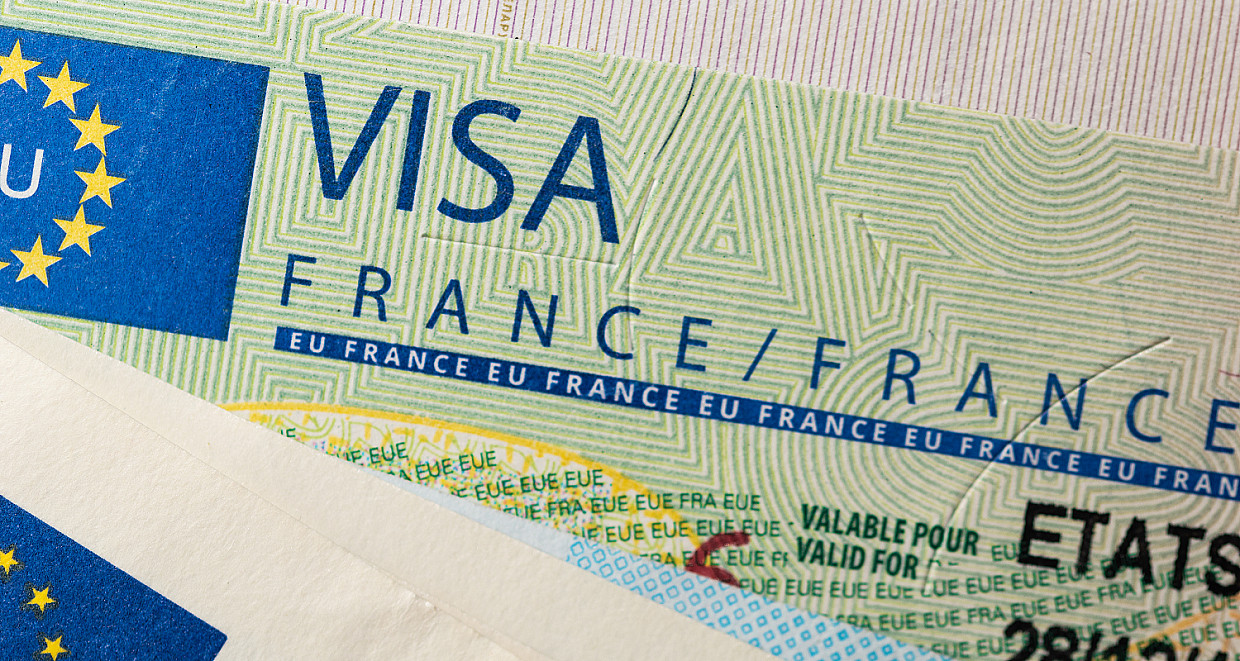
France’s repeated increases in the statutory minimum wage (SMIC - Salaire Minimum Interprofessionnel de Croissance) are having a growing knock-on effect on foreign nationals applying for or renewing residence permits.
Over the past eight years, the SMIC has risen sharply, particularly during the post-pandemic inflation surge.
Because many categories of carte de séjour are tied directly or indirectly to multiples of the SMIC, each increase has steadily raised the minimum income foreigners must demonstrate in order to live and work legally in France.
The latest increase, announced for next month, will raise the SMIC by a further +2.4%, according to Labour Minister Jean-Pierre Farandou, following another inflation-triggered adjustment.
In 2018, the gross monthly SMIC stood at roughly €1,498. By January 2026 it had reached €1,823 gross per month — an increase of more than 21% in eight years.
The increases accelerated after 2021 as France’s automatic inflation-indexation mechanism triggered multiple rises within the same year.
The sharpest jumps came during the inflation crisis of 2022–2024, when the SMIC was revalued several times outside the usual January schedule.
Many French residence permits require applicants to prove “sufficient and stable resources.” In practice, prefectures frequently use the SMIC as the benchmark.
In particular, initial ‘visitor’ visas to live in France for 12 months generally require applicants to demonstrate resources at least equivalent to the minimum wage.
However, the immigration authorities do not use the gross figure to assess income but the net figure, after deduction of social charges.
As a result, the current figure is €1,443 net per month per person, or €17,317 per year. In June, that will increase to €1,477 per month or €17,733 per year, but not all consulates will necessarily apply it immediately.
Strictly speaking, although these figures are per person, consulates and prefectures take a broader view of each application, so that, for instance, a couple would not be required to have twice SMIC. Practices vary between consulates, but a figure of around 1.5 SMIC (net) per couple appears to be the widely used threshold.
Where there are children, for visitor visas there are no official thresholds, although practice appears to be then around 1.8 SMIC for a couple and one child. Much will depend on the profile of the applicant and the country of application.
For regroupement familial procedures, which is available to non-EU nationals legally residing in France who wish to reunite with their family, the official income thresholds for households of 2–3 people is equivalent to the gross SMIC (€1,823); for households of 4–5 people, the threshold is €2,005 per month on average.
Since 2025, the Talent Passport visa does not use SMIC. The threshold for qualified employees is around €40,000 a year.
The issue does not arise solely at the stage of the initial visa or residence permit application; upon renewal, applicants are generally expected to satisfy the income thresholds applicable at that time, although the rule is not automatic.
After around five years of lawful residence, many foreign nationals become eligible for a 10-year carte de résident, where the assessment of resources becomes broader and less mechanical than for temporary permits.
Once a 10-year resident card has been obtained, there is generally no recurring annual SMIC-style income test simply to continue residing in France, although renewal conditions and residency requirements still apply.
There is no income test for European nationals exercising treaty rights of free movement, although economically inactive EU nationals may still technically be required to have sufficient resources and health insurance under EU free movement rules.
Related Reading: