

French government support for the development of housing has traditionally been to grant tax relief on investment in new housing to rent.
Over the past 30 years there have been a hatful of schemes, all christened after the sponsoring government minister - Perissol, Besson, Robien, Demissine, Borloo, Scellier Duflot, Pinel, and Cosse.
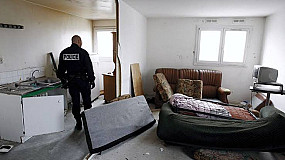
Inevitably, this has been at the expense of the existing housing stock, particularly in small to medium sized towns, most of which have been in decline for many years, with a large number of vacant homes, and much of the stock in a degraded condition.
In a change of strategy that occurred in 2019, the government passed a new law ('Loi Denormandie') that offers many of the same incentives towards investment in existing housing.
Under the scheme, individual investors are encouraged to buy and rent properties that need renovation in older neighbourhoods of eligible towns.
The scheme inevitably comes with a list of important conditions that must be met, such as the nature and standard of work that must be carried out, and the areas in which eligible properties are located.
There are also price caps on purchase and renovation costs, income caps for tenants and rental caps on a property, although all fairly generous.
What Properties are Eligible?
The vast majority of eligible properties are located in smaller towns and cities where Coeur de ville urban regeneration projects are underway.
In total, there are 245 Coeur de ville towns and cities in France. A full list is available at Action Coeur du Ville.
In addition, there are a further 54 locations where an urban regeneration programme (Opération de Revitalisation du Territoire - ORT) is in place, where the local authority can also make the scheme available.
Certain other communes are also eligible, where the need for rehabilitation is important.
Within eligible zones, price limits also apply, with a maximum purchase price of €300,000, and purchase and renovation costs that cannot exceed €5,550 per m2.
This can also be split between a maximum of two properties, costing for example €150,000 each.
Buyers can purchase a more expensive property and obtain a tax break, but only €300,000 worth of the total purchase cost and renovation works will be eligible.
What Renovation Works are Eligible?
Renovation works must be equivalent to at least 25% of the total purchase and renovation cost of the property,
The works must be completed within 2 years of purchase of the property, although the tax authority will consider granting an extension if exceptional circumstances apply.
Owners must also have receipts for the works from an accredited professional.
Works must improve energy performance by at least 30% in individual homes and 20% in apartments.
Which Tenants are Eligible?
The property must be rented unfurnished for use as a primary residence within one year of completion of the renovation. Accordingly, furnished holiday lettings are not eligible.
Owners must also agree to rent the property long-term, either 6, 9 or 12 years. It is possible to let for an initial 3-year period and later extend it.
The annual income of the tenants must be no greater than maximum thresholds, which differ by area, but the thresholds are generous. The figures are for 2024.
The maximum annual income for a single person ranges from €43,475 down to €31,892, depending on the area.
The maximum annual income for a couple ranges from €64,976 to €42,588, again depending on the locality.
There are substantial additional increases for children.
Rental caps also apply, ranging from a maximum rent of €18,89/m2 down to €9.83/m2 per month by locality.
To find out more about the zoning you can refer to Simulateur Zonage Denormandie.
How Much Tax Relief?
The tax relief granted is by way of a reduction in your income tax bill, not a tax credit or grant. Accordingly, you will only benefit if you pay enough in income tax to obtain the full deduction.
The rate of the income tax reduction depends on the duration the owner agrees to rent the property.
For the first nine years of a rental the percentage tax reduction increases each year by 2% of the total cost of purchase and renovation of the property. After this it increases by 1% each year for three years.
This means that owners who rent a property for six years get a 12% tax break, going up to 18% after 9 years, and 21% after 12 years. Given that for the first three years the amount of the tax break is not substantial, the scheme is one for the long-term.
Owners who spend the maximum limit of €300,000 on buying and renovating a property and who then rent it for 12 years stand to recuperate €63,000 of their initial costs through income tax reimbursements.
Application Process
You need to make application for a reduction in income tax under Denormandie as part of your income tax declaration, for which professional assistance will be required.
Other Schemes
As an alternative to Denormandie, it is possible to consider alternative approaches.
i. 'Déficit foncier'
For works for which you have claimed tax relief under Denormandie you cannot also claim relief against income tax and social charges, under the standard regime of 'déficit foncier', which allows you to set off rental losses against other income. Only if the total cost exceeded the 25% threshold for the works would it be possible to also set the cost off against rental income.
Accordingly, you would need to determine whether you would be better off seeking relief under Denormandie or deduction of all the works under déficit foncier. That is going to depend on your marginal income tax rate and cost of the works and, ultimately, the duration of the letting; the longer you let under Denormandie the more likely it is that it will be more beneficial.
The rules on capital tax gains are also different. If you choose Denormandie you are able to offset the works against capital gains, whereas cost of works claimed under déficit foncier are not deductible.
ii. Home Improvement Grants
As an alternative to Denormandie, the housing renewal agency ANAH offer grant support to landlords. Different rules apply to ANAH grants, so you would need to discuss with local officials what might be on offer, but you can find information on the scheme at Home Improvement Grants.
iii. Conservation Areas
In conservation areas, once again as an alternative to Denormandie, it is possible to obtain a reduction in tax of up to 30% for investment in a property for rent under a scheme for renovation of properties of architectural interest called 'Malraux'. It is not cumulative with Denormandie.
Market Assessment
In the end, of course, tax incentives to invest are only half the equation, as the more fundamental issue turns on market factors.
With the right location, property and tenants, the scheme can be advantageous – but these are not always easy to find.
At its worst, buyers risk investing in declining towns where long-term investments may lose money, and where the prospects of being able to resell at a profit may be low, particularly given the expensive mandatory renovation works necessary.
Géraud Nayral, from tax partners Cabinet Budiz states that: “This kind of tax break looks very beneficial, but you need to consider the commercial outlook and all the restrictions that apply, especially the unfurnished rental obligation, the rent limitation and the fact that you must pay enough income tax to benefit from it."
Related Reading:
© 2022 France-Insider All Rights Reserved