
For the purposes of the tax declaration, 'furnished lettings' (locations meublés) are those furnished properties let out on either a short-term or long-term basis, whether a house, apartment or chambre d'hôte.
Those who let out furnished lettings may be:
'Professional' or 'non-professional' landlords (LMP or LMNP)
Business registered or not business registered
Resident or non-resident
Depending on your circumstances and the choices you make, the method of taxation of the rental income you receive may be either:
Régime Réel
Micro-BIC
Micro-Fiscal
Those who adopt the régime réel use profit and loss accounting rules for the determination of their income, making them liable for tax on their net income after deduction of eligible costs. You will need the assistance of an accountant for submission of your tax declaration, so we do not consider such landlords in these notes.
Similarly, those who are landlords of investment properties let out under special tax regimes (Scellier, Robien etc), or who are LMP, are not covered in this guidance.
On-Line Account
In order to declare on-line to make the declaration you will need to connect to Impots.gouv.fr and click on 'Votre Espace Particulier' and create an account with 'Création de mon espace particuliere.'
You will need to obtain from your first tax notice (avis d'imposition) your:
Numéro fiscal;
Numéro d'accès en ligne;
Revenu fiscal de référence.
If you have not previously made a declaration you will need to submit a paper declaration to your local tax office. Forms are available for downloading on-line.
Forms
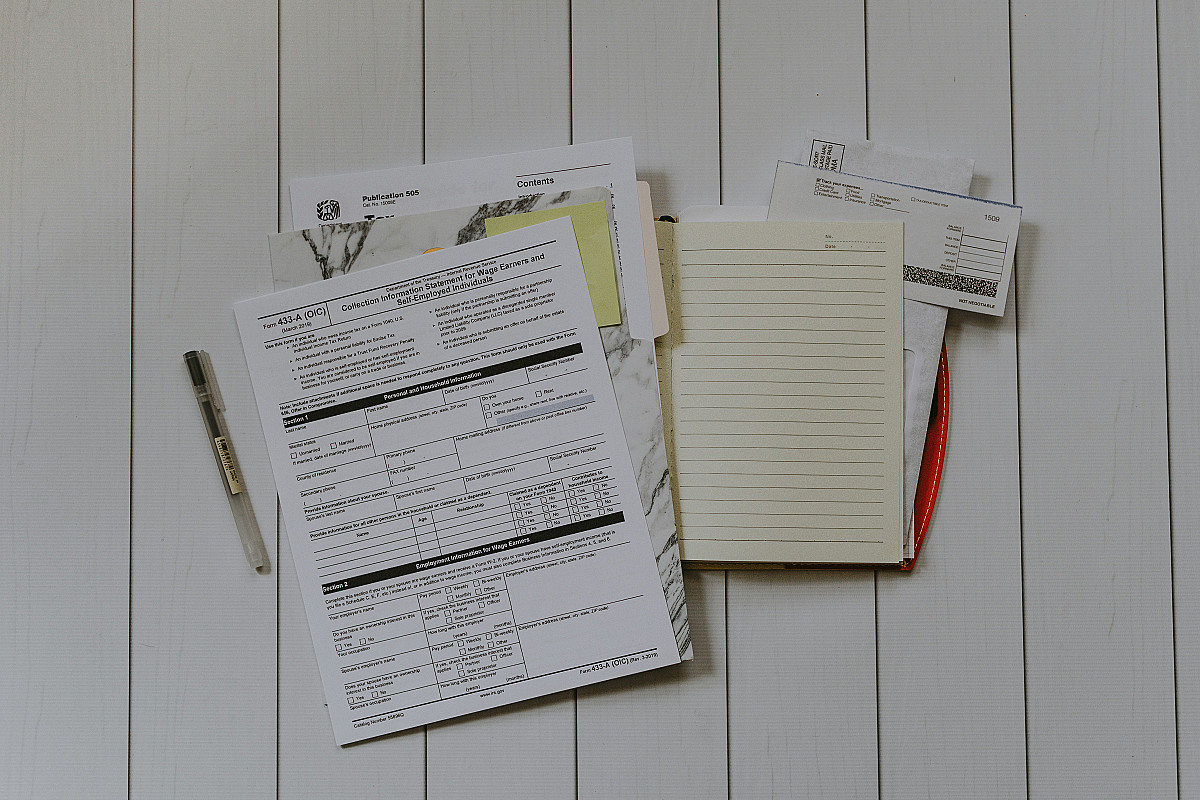
The form to use to declare your furnished rental income is a supplementary form to the main F2042, called F2042-C-Pro. Both forms will need to be submitted.
Before you can start to enter your income on 'Pro' you need to indicate on F2042 that you will be declaring furnished rental income. If you are making the return on-line, this will ensure the relevant form and sections open out to you for completion.
To declare furnished rental income, on the F2042, in the 'Étape 3' page titled 'Revenus et Charges' you need to tick the box ''Revenus des locations meublées non professionnelle'.
Alternatively, if you are pursuing the activity as a registered micro-entrepreneur, who has opted to pay income tax under the system of 'micro-fiscal', you need to tick 'Micro-entrepreneur (auto-entrepreneur) ayant opté pour le versement libératoire de l’impôt sur le revenu '.
If you let furnished property in France through Airbnb, Abritel, Booking.com or similar websites, you should have received from the operator details of the income received, which they will also have communicated to the tax authority.
i. Micro-BIC
If you have the standard micro-bic tax status you will be assessed for income tax and social charges on your gross annual rental income, less a fixed cost allowance – either 50% or 71%, depending on the nature or classification of the accommodation.
Properties that benefit from the higher allowance are meublés de tourisme classés and all chambres d'hôtes. You can read more at Quality Ratings for Gite Accommodation.
On the F2042-C-Pro you will need to track to the section headed 'Revenus des Locations Meublées Non Professionnelles'.
If you are not a micro-entrepreneur landlord, you should enter your gross rental income in either Boxes 5ND/50D for general furnished lettings or Boxes 5NG/5OG for chambres d’hôtes and meublés de tourisme classés.
A couple can divide total income between them and insert each share of the income in the relevant boxes (Déclarant 1/2), but this is really only important if their liability to social charges is not the same, as the total income is divided in the tax assessment.
If you are a micro-entrepreneur landlord, you should enter your gross rental income in either Boxes 5NW/5OW or Boxes 5NJ/OJ as appropriate, EXCEPT those who have elected for 'micro-fiscal' (see below). A couple should only divide the income (Déclarant 1/2) where they are both business registered.
If it is a seasonal letting activity you have no need to complete the line 'Durée de l’exercice'.
If you are registered as a micro-entrepreneur you can opt to pay a flat-rate income tax with your flat-rate social security contribution, under a system called micro-fiscal you should go to the opening page of the Form 2042-C-Pro where it is headed 'Micro-Entrepreneur (auto-entrepreneur) ayant opte pour le versement de liberatoire de l'impot'.
You need to enter your gross income in Boxes 5TB/5UB (Prestations de services et locations meublés) as appropriate. That is all you need do.
Social Charges
Those who are not affiliated to the French health system (S1 holders or non-residents) are exempt from social charges on their rental income.
In order to obtain this exemption (and only if you are not a micro-entrepreneur landlord), you need to use Form 2042C (Déclaration Complementaire) and head to Section 8, 'Divers' and the part Revenus du patrimoine exonérés de CSG et de CRDS'. You should tick one or both Boxes 8SH and 8SI, depending on your circumstances. That is to say, whether one or both spouses are exempt.
If you have previously made a tax declaration in France, this section may be included in your (personalised) on-line page on the main F2042, in which case there will be no need to use a separate form.
The Form 2042C is used mainly to declare certain types of investment income, but it includes on it the above section, using the same headings and box numbers.
That should ensure that social charges are not imposed on your rental (or other capital) income, although you will be liable for the solidarity tax (prélèvement de solidarité) at the rate of 7.5%.
Foreign Rental Income
The process above does not apply entirely to foreign furnished rental income received by a resident of France.
The basis on which such income is taxed will depend on the terms of the tax treaty between France and the country concerned. In most cases it is taxable in the country of origin, but has to be declared in France.
You therefore need to head to Section 8 on the Form 2042C and complete the relevant box, which will normally (UK and many other countries) be Box 8TK ('Revenus de source étrangère ouvrant droit à un crédit d’impôt égal à l’impôt français') together with the amount of tax paid abroad (if known) in 8VM/8WM. Such income will also need to be declared on Form 2047 (again, normally Section 6) as foreign sourced income.
Related Reading: